

Squid is a nutritious seafood, rich in high-quality proteins, Omega-3 fatty acids, vitamins, and minerals. Still, for people who suffer from gout, there are some difficulties, as seafood contains varying degrees of purines. Purines are substances found in many foods and drinks, which, when metabolized in the body, convert to uric acid that can accumulate in joints and trigger gout symptoms when consumed in large quantities.
As seafood choices continue to evolve, many readers are now exploring modern dishes such as squid ink seafood pasta, which has gained popularity for its bold flavor and striking visual appeal. What was formerly a niche dish is now usually found on restaurant’s bill of fare and relished by seafood lovers looking for something a little assorted.
What Are Purines?
Purines, found in plants and animals, are essential for DNA and RNA formation. Excessive uric acid levels can cause gout attacks, so regulating purine consumption is crucial for those with gout or hyperuricemia.
With this increasing interest, an ordinary and crucial question arises: Is squid high in purines? For individuals managing gout or raised uric acid levels, this interest is entirely valid and should not be neglected. Understanding how seafood affects the body helps people make improved, more assured dietary choices.
Squid itself does contain a moderate amount of purines, which means it should not be consumed excessively, especially by those following a low-purine diet. However, it is important to note that squid ink contributes very little to overall purine intake and is mainly used to enhance taste and color rather than nutritional content.
Purine Content and Squid
Squid refers to calamari and the most consumed sea foods available in restaurants through grilling, frying, or in soups and salads. It appears that it is sheltered from three classes of nutrients of concern, which include Vitamin D, calcium, and potassium but it contains high levels of purine.
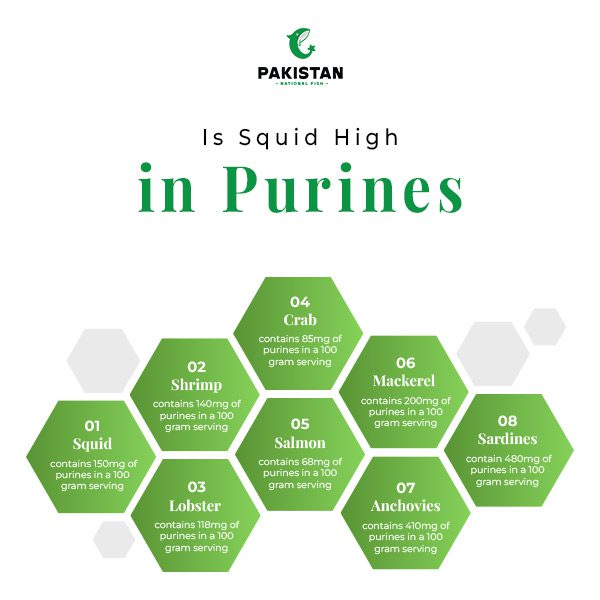
Squid can be considered to be in the moderate range of high-purine food, with an average of 135-150mg/100g. Purine contents of food mean the number of purine per 100 grams of food; any food containing above 200 mg of purine content is considered high in purine hence not among the highest purine content foods but rather the low range but still HIGH in purine contents is the squid. Still, it is not in the low-purine category either and that is any less than 50 milligrams per 100 grams.
Advantages of Squid with Purine Content
1. High in Lean Protein
2. Rich in B Vitamins
3. Abundant in Essential Minerals
4. Key to Moderation
Squid and Other Seafood Comparison