Salmon Life Cycle in Washington: Stages, Species, Rivers & Migration
The salmon life cycle in Washington begins in freshwater, continues through estuaries and the Pacific Ocean, and ends when adults return to spawn. Each species follows a different migrationpattern, making Washington’s rivers, lakes, and coastal habitats essential to salmon survival.
What Are the 7 Stages of the Salmon Life Cycle?
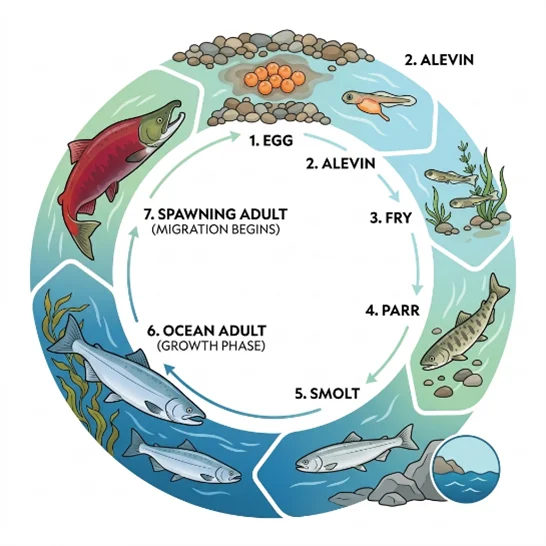
Pacific salmon generally pass through seven major life stages: egg, alevin, fry, parr, smolt, ocean adult, and spawning adult.
According to NOAA Fisheries, salmon begin life in freshwater, then migrate to saltwater and return to freshwater as adults.
1. Egg
Female salmon create nests in river or stream gravel called redds. After laying their eggs, males fertilize them. The eggs remain beneath the gravel while they develop.
Clean, cool, well-oxygenated water is especially important during this stage.
2. Alevin
After hatching, young salmon are known as alevin. They remain protected within the gravel and survive using nutrients stored in an attached yolk sac.
During this period, they are not yet actively searching for food.
3. Fry
Once the yolk sac is absorbed, young salmon emerge from the gravel as fry.
They begin feeding on small aquatic organisms and start using streams, shallow margins, side channels, and other freshwater habitats.
4. Parr
As juveniles grow, many species enter the parr stage.
Parr develop distinctive vertical markings that help provide camouflage. Depending on the species and population, they may remain in freshwater for weeks, months, or more than a year.
5. Smolt
Before entering saltwater, juvenile salmon undergo a biological transformation called smoltification.
During this process, their bodies adapt to survive in marine water. These young fish, called smolts, begin moving downstream toward estuaries and the ocean.
6. Ocean Adult
Once in the Pacific Ocean, salmon feed intensively and grow toward maturity.
The amount of time spent at sea varies among species and populations. Ocean conditions, food availability, predators, and water temperatures can all affect survival during this stage.
7. Spawning Adult
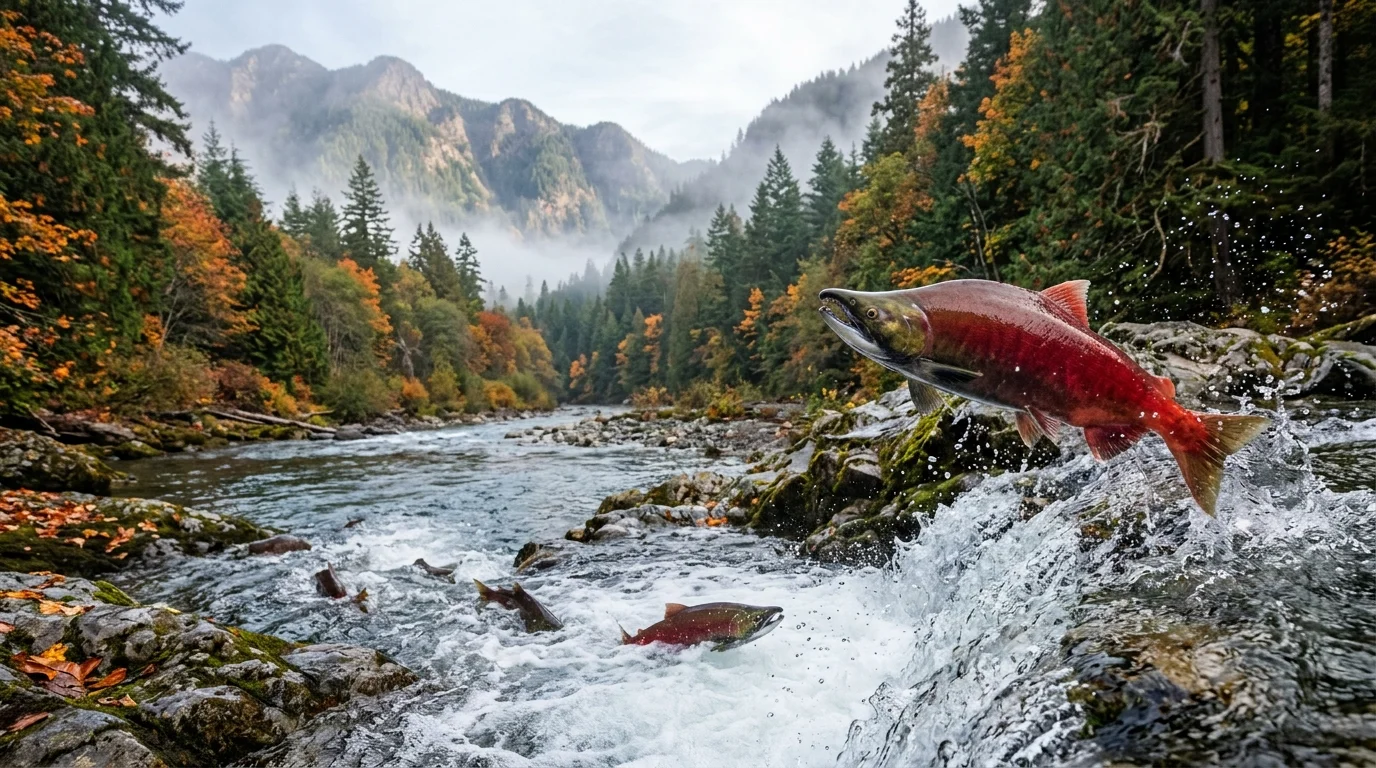
When mature, adults begin their return migration toward freshwater spawning habitat.
Most Pacific salmon show a strong tendency to return to the river system where they originated. After reaching suitable spawning habitat, females construct redds, spawning occurs, and a new generation begins.
The five native Pacific salmon species found in Washington generally die after spawning.
Why Are Estuaries Important to Young Salmon?
Estuaries are among the most important transition habitats in the salmon life cycle.
Here, freshwater from rivers mixes with saltwater from the ocean. For many juvenile salmon, estuaries provide time to adjust gradually to higher salinity before entering fully marine conditions.
Estuaries also offer:
- Abundant food
- Shelter from some predators
- Slower-moving water
- Shallow habitat
- Areas for resting and growing
NOAA Fisheries identifies estuarine and nearshore habitats as important parts of the broader ecosystem used by Pacific salmon during their migrations.
Which Salmon Species Live in Washington?
Washington is home to five native species of Pacific salmon:
- Chinook salmon
- Coho salmon
- Chum salmon
- Sockeye salmon
- Pink salmon
Steelhead also migrate between freshwater and saltwater, but steelhead are a migratory form of rainbow trout rather than one of the five Pacific salmon species.
Washington Salmon Species at a Glance
| Species | Freshwater Life | Migration Characteristics | Typical Washington Pattern |
| Chinook | Highly variable | Some populations migrate long distances | Spring, summer, fall, or other run timing depending on population |
| Coho | Often spend substantial time in streams | Use pools, side channels, and sheltered habitat | Adults commonly return in fall |
| Chum | Usually leave freshwater relatively early | Strong dependence on estuaries and nearshore areas | Many populations return in late fall or winter |
| Sockeye | Juveniles commonly rear in lakes | Strong connection to lake-and-river systems | Timing varies by watershed |
| Pink | Short freshwater juvenile stage | Fry migrate toward saltwater soon after emerging | Established Washington runs occur in odd-numbered years |
Exact migration timing varies by river, population, water conditions, and year.
Chinook Salmon
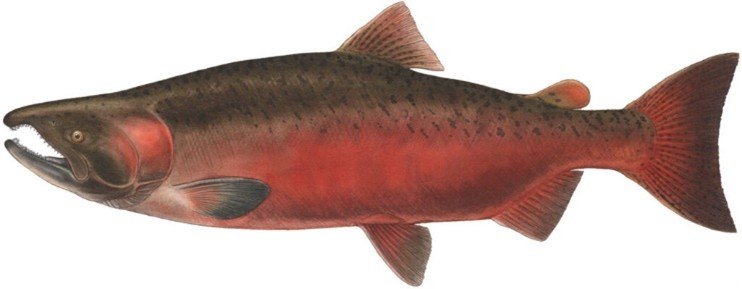
Chinook salmon, also called king salmon, are the largest Pacific salmon.
Their life histories are remarkably diverse. Different populations may return to Washington rivers during spring, summer, fall, or other seasonal periods.
Some Chinook migrate far inland before reaching their spawning habitat, while others reproduce much closer to the coast.
This variability helps explain why there is no single migration schedule that applies to all Chinook salmon in Washington.
Coho Salmon
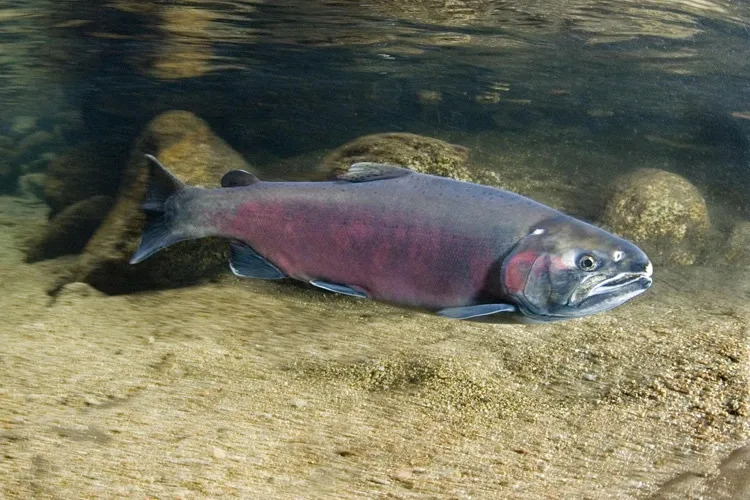
Coho salmon, also known as silver salmon, often spend significant portions of their juvenile lives in freshwater.
Young coho commonly use:
- Small streams
- Pools
- Side channels
- Woody habitat
- Slow-moving areas
- Sheltered tributaries
These areas can provide both food and protection while juveniles grow.
Adults commonly return in the fall, although the exact Timing varies among river systems and individual populations.
Chum Salmon
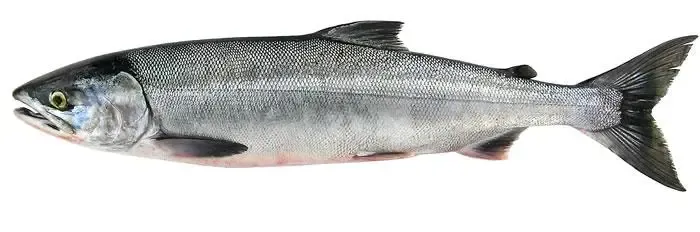
Chum salmon generally spend less time rearing in freshwater than coho.
After emerging from the gravel, young chum usually begin moving toward lower rivers, estuaries, and coastal waters relatively quickly.
Because of this life-history strategy, healthy estuaries and nearshore environments are especially important for chum survival.
Many Washington chum populations return later in the year.
Sockeye Salmon
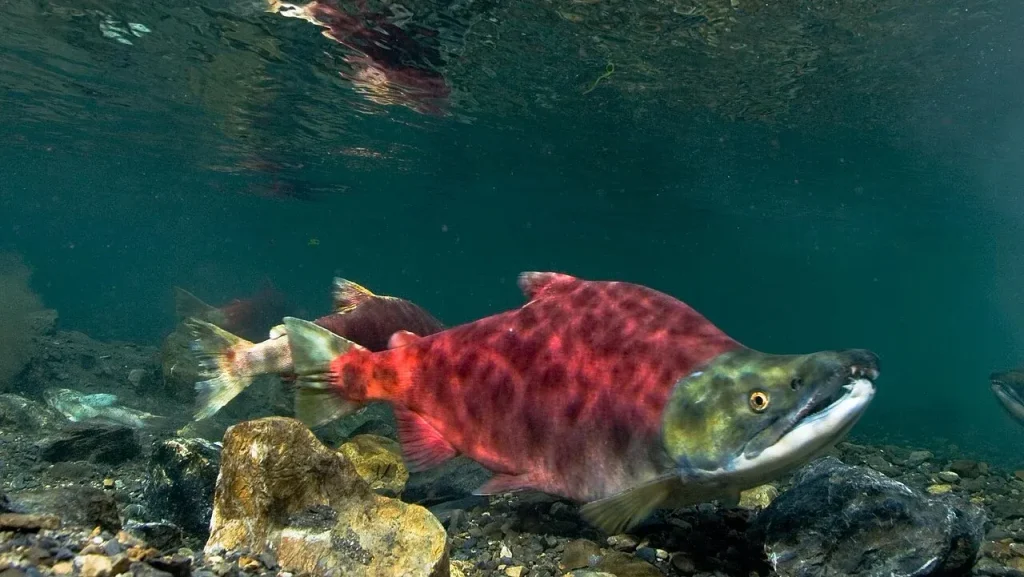
Sockeye salmon have a particularly strong connection with lakes.
Juvenile sockeye commonly spend part of their early lives rearing in lake environments before migrating downstream and eventually entering the ocean.
Washington sockeye occur in systems that include:
- Lake Washington
- Baker Lake
- Lake Wenatchee
- Ozette Lake
- Quinault Lake
Because lakes play such an important role in sockeye development, their habitat requirements can differ significantly from salmon species that depend mainly on streams during their juvenile stages.
Pink Salmon
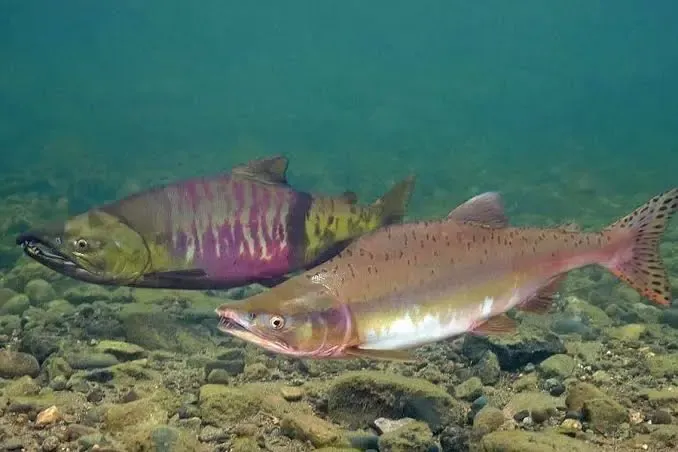
Pink salmon have one of the most predictable life histories among Washington salmon.
They complete their life cycle in approximately two years. Established Washington pink salmon populations return during odd-numbered years.
Unlike species that spend extended periods growing in freshwater, pink salmon fry generally migrate toward estuaries and saltwater soon after emerging from the gravel.
Where Do Salmon Live in Washington?
Salmon use rivers and watersheds across Washington, but several major regions illustrate how different migration systems work.
Columbia River Basin
The Columbia River is one of the most important salmon migration corridors in the Pacific Northwest.
Adults returning from the Pacific Ocean enter the Columbia and may continue hundreds of miles through the basin toward spawning areas.
The Snake River, one of the Columbia’s major tributaries, supports important salmon and steelhead populations, including Chinook and sockeye.
Because salmon must move through an extensive network of rivers, dams, reservoirs, tributaries, and spawning habitat, connectivity is especially important throughout the Columbia Basin.
Puget Sound Rivers
Several rivers flowing into Puget Sound support important salmon populations, including:
- Skagit River
- Snohomish River
- Stillaguamish River
- Nooksack River
- Puyallup River
Juvenile salmon moving downstream through these systems eventually reach estuarine and nearshore habitat.
For example, habitat restoration projects in the Skagit River estuary have specifically focused on improving areas used by juvenile Chinook salmon.
Washington Coastal Rivers
Washington’s Pacific coast also contains important salmon watersheds.
Examples include:
- Quinault River
- Hoh River
- Queets River
- Chehalis River
These systems connect inland freshwater habitat directly with coastal and marine environments.
Their relatively direct connection to the Pacific creates migration patterns that can differ markedly from those of salmon traveling deep into the Columbia River Basin.
How Do Salmon Find Their Way Back Home?
One of the most fascinating parts of salmon migration is their ability to return toward the waters where they originated.
Salmon use several navigational cues during their migrations, and smell plays an important role.
As juveniles, salmon can imprint on chemical characteristics associated with their natal waters. When they return as adults, remembered odors help them identify their home watershed.
Homing is extremely strong but not perfect.
Some salmon enter neighboring streams rather than returning to their exact place of origin. This behavior, known as straying, can help salmon colonize suitable new habitat while natal homing helps maintain locally adapted populations.
What Threatens Salmon Migration in Washington?
The salmon life cycle depends on connected habitat extending from spawning gravel to the Pacific Ocean.
A problem at one stage of the journey can affect survival during later stages.
Major pressures can include:
- Dams that delay or complicate migration
- Culverts that restrict fish passage
- Warm river temperatures
- Low summer streamflows
- Loss of wetlands and side channels
- Degraded estuary habitat
- Sediment and pollution
- Predation
- Changing ocean conditions
- Reduced food availability in marine environments
Why Do Salmon Species Migrate at Different Times?
No single Washington salmon population shares a single migration schedule.
Timing is influenced by several factors, including:
- Genetics
- Species
- Age
- River conditions
- Streamflow
- Water temperature
- Ocean conditions
- Location of spawning habitat
Chinook populations may return during several different seasonal periods.
Coho commonly return during fall.
Many chum populations return later in fall or into winter.
Pink salmon follow their distinctive two-year cycle.
Sockeye timing is closely connected to the characteristics of their specific lake and river systems.
These differences are important because they allow different salmon populations to use Washington’s waterways at different times of year.
For anglers and wildlife watchers, this also means there is no single ecological “Washington salmon season.” Different runs move through different watersheds at different times.
Fishing note: Salmon fishing seasons, open areas, harvest limits, and regulations can change by species, river, and year. Always check current Washington Department of Fish and Wildlife regulations before fishing.
Best Places to See Salmon Migration in Washington
Washington has several locations where visitors can observe salmon returning from the ocean to freshwater spawning areas. These sites provide a closer look at salmon migration and the habitats that support their life cycle.
Ballard Locks
The Hiram M. Chittenden Locks (Ballard Locks) is one of the best places near Seattle to watch salmon migration. Visitors can view Chinook, Coho, and Sockeye salmon moving through the fish ladder during seasonal runs.
Issaquah Salmon Hatchery
The Issaquah Salmon Hatchery offers an easy way to learn about salmon life stages. During fall, visitors can often see returning Coho salmon and learn about hatchery conservation efforts.
Olympic Peninsula Rivers
Rivers such as the Quinault, Hoh, and Queets support important salmon populations. These coastal watersheds connect freshwater spawning areas with the Pacific Ocean and provide habitat for Chinook, Coho, and Chum salmon.
Columbia River Tributaries
The Columbia River Basin is one of Washington’s most important salmon migration routes. Tributaries such as the Snake River support major salmon runs, including Chinook and Sockeye.
Salmon viewing seasons vary by species, river system, and environmental conditions, so checking local migration updates before visiting is recommended.
Why Different Salmon Species Need Different Habitats
Understanding species differences is important for salmon conservation.
Not all salmon species will receive equal benefits from one habitat restoration approach.
- Juvenile sockeye frequently rely on lake habitats that produce high productivity,
- Juvenile chum rely on access to estuarine and nearshore habitats.
- Coho juveniles may rely on small streams, pools, side channels, and sheltered freshwater habitat for extended periods.
- Chinook populations can use combinations of rivers, estuaries, floodplains, and marine environments depending on their individual life histories.
Protecting salmon therefore means maintaining a connected network of habitats rather than focusing only on spawning areas.
FAQs
Do all salmon return to the exact stream where they were born?
Most Pacific salmon show strong natal homing and return toward the river or stream system where they originated.
Their sense of smell helps them recognize chemical characteristics associated with their home waters.
However, some salmon stray into other suitable streams.
Do Washington salmon die after spawning?
Yes. The five native Pacific salmon species found in Washington generally die after spawning.
Steelhead are different. Some steelhead survive spawning, return to saltwater, and may reproduce again during a later migration.
How long does the salmon life cycle take?
It depends upon the type of fish.
Pink salmon have a very regular pattern of two years of life span, while Chinook, coho, sockeye, and chum might follow different patterns of life spans.
Why are estuaries important to salmon?
Juvenile salmon get their food, shelter, and gradual exposure to saltwater in the estuaries.
The estuary ecosystem forms an integral part of the migration journey for some groups of juvenile fish.
What is the difference between salmon and steelhead?
The five Pacific salmon species that exist in Washington include Chinook, Coho, Chum, Sockeye, and Pink Salmon.
Steelhead are migratory rainbow trout.
In contrast to Pacific salmon that usually die after reproduction, steelheads have the ability to reproduce more than once.
When do salmon migrate in Washington?
There is no single statewide migration period.
Migration timing depends on the species, population, river system, water temperature, streamflow, and other environmental conditions.
Different Chinook runs, for example, can return during different seasons, while coho commonly return in fall and many chum populations return later in the year.
Following the Salmon’s Journey
Salmon in Washington state is best described in the context of one migration through freshwater, estuarine, coastal, and marine systems.
The eggs require clean gravel and cold water. The juveniles need productive freshwater environments and a safe passage downstream. Some juveniles also require estuarine environments as they transition to marine life. The marine environment requires productive oceans for oceanic salmon, while the rivers and spawning sites need to be easily accessible for adult migrating salmon.
The entire salmon migration process from Puget Sound and coastal Washington State rivers to the extensive Columbia River Basin cannot be overlooked.
By knowing what kind of salmon is associated with a certain watershed and when they use it helps in understanding the behaviors and migratory patterns of these salmon and the habitats required by Washington’s salmon migrations for future generations.