


If you’ve ever paused while watching a nature show or stood in front of a seafood counter wondering what the real difference is, you’re not alone. The Octopus vs squid query confuses many people, and frankly, that makes sense. At an initial glimpse, they look closely like twins. Long arms, soft trunk, and those big eyes that appear to gaze right back at you.
But in one case, you slow down and truly get to know them, and you first observe something fascinating. These two organisms may look kindred, but they live very different lives in the ocean. They change differently, hunt differently, and even act differently. One is restful, peculiar, and artful. The other is blistering, vigilant, and always on the conclusion.
So, rather than victimization by knotty science terms, let’s discuss squids and octopuses, the means actual people do merely, distinctly, and in a way that really makes sense.
Table of Contents
What Are the Primary Physical Differences Between Octopus vs Squid?
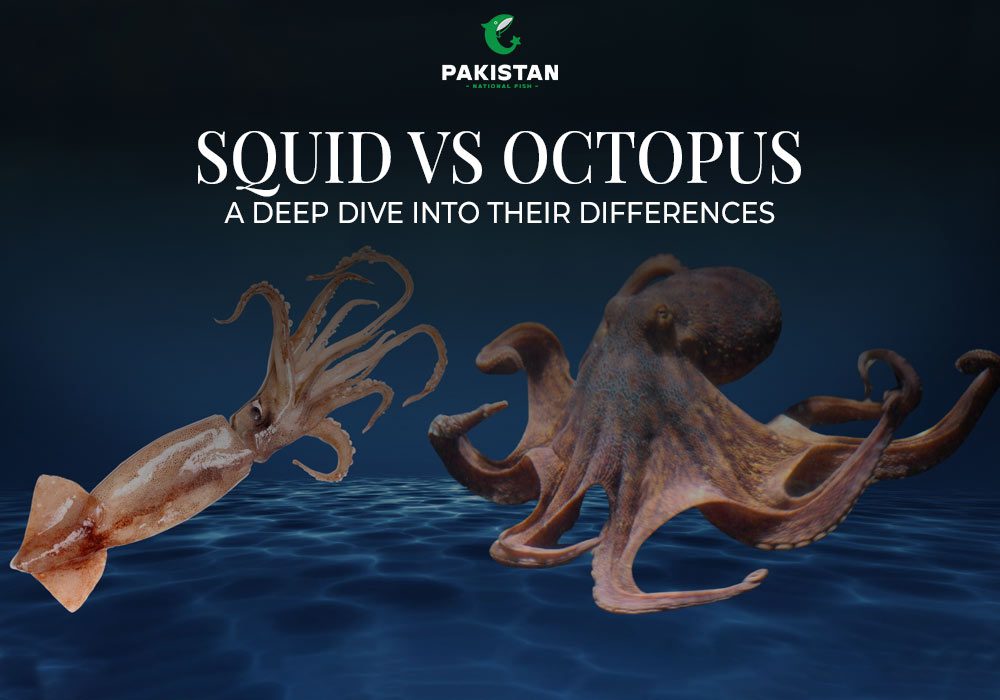
The easiest way to tell the difference between an octopus and vs a squid is by looking at their arms.
An octopus has eight arms, and that’s it. All eight are flexible, strong, and covered with suckers. These arms aren’t just for grabbing food; they’re how the octopus explores the world. It touches, feels, tastes, crawls, and even plays using its arms. Each arm can move on its own, which is one reason octopuses are known for being smart.
A squid also has eight arms, but it adds two long tentacles that completely change how it hunts. When a squid sees food, it doesn’t sneak or wait. It strikes fast. Those two tentacles shoot out, grab the prey, and pull it in before anything can escape.
Their bodies also give them away. Squids have long, slim bodies made for speed. They live in open water and are always swimming. Octopuses have rounder, softer bodies that help them hide in rocks, coral, and tiny cracks on the sea floor.
How Do Squid and Octopus Body Parts Compare?
Feature | Octopus | Squid |
Arms/Tentacles | 8 soft, flexible arms | 8 arms + 2 long tentacles |
Head | Rounded and squishy | Long and firm |
Mantle | Soft, usually no fins | Smooth with side fins |
Ink Sac | Used to escape | Used to distract enemies |
Octopuses generally crawl. They move slowly on the ocean floor, cautiously searching their environment. They’re peculiar and preoccupied creatures that opt for concealing, merging in, and going unnoticed.
Squids are the alternative. They float almost all the time. Their fins assist them in moving rapidly, and their distinct vision helps them spot risk or food from far.
One genuinely cool thing they share is that both animals have three hearts and bluish blood. That’s not something you see every day.
Do Octopus Have Bones, and What About Squid?
This question comes up again and again in the octopus vs squid discussion.
Octopuses have no bones at all. This is the reason they can compress through tiny holes that appear impossible. If the beak fits, the entire body fits. This aids them to shroud from attackers and surprise their prey.
Squids don’t have bones either, but they do have a thin inner support called a gladius. It’s floaty and supple, and it helps the squid keep its contour while swimming rapidly.
Because neither animal has bones, they’re both improbably limber and amazingly difficult to catch.
What Are the Scientific Names of Squid and Octopus?
Creature | Scientific Name | Notes |
Common Octopus | Octopus vulgaris | Found worldwide |
Common Squid | Loligo vulgaris | Coastal waters |
Giant Squid | Architeuthis dux | Deep ocean |
Short-Arm Octopus | Octopus minor | Smaller species |
How Does the Octopus Mouth Differ from a Squid’s?
The octopus’s mouth is invisible right in between its arms. Internally, it has a hard beak that resembles a bit like a bird’s beak. It’s powerful enough to cleft shells and split food.
Squids also have beaks, but theirs are sharp and more needle-like. They also use a radula, which works like a rugged tongue draped in tiny bumps that grind food down before consumption.
So even though they eat similar food, the way they eat feels very contrastive.
Do Octopus Have Teeth, and Do Squid?
No teeth here.
Neither octopuses nor squids have teeth like humans. Instead, they use:
- A beak to break food
- A radula to grind it
The radula keeps renewing itself, which makes eating easier throughout their lives. Their diet mostly includes fish, crabs, shrimp, and other small sea creatures.
What Are the Different Octopus Types and Squid Varieties?
There isn’t just one kind of octopus or squid—there are hundreds.
Common Octopus Types:
- Common Octopus (Octopus vulgaris)
- Giant Pacific Octopus (Enteroctopus dofleini)
- Blue-Ringed Octopus (Hapalochlaena)
Popular Squid Varieties:
- Short-Fin Squid (Illex illecebrosus)
- Humboldt Squid (Dosidicus gigas)
- Giant Squid (Architeuthis dux)
Each one has adapted to where it lives, whether that’s shallow water or the deep ocean.
How to Understand the Life Cycle of an Octopus and Squid?
The life cycle of an octopus and squid is short but meaningful.
Octopus mothers lay thousands of eggs and protect them without leaving. During this time, they usually stop eating. Once the eggs hatch, the mother often dies soon after.
Squids lay eggs in clusters that float or stick to surfaces. Their young grow fast and reach adulthood quickly.
Most octopuses live one to three years, and squids live one to two years. Even in that short time, they play a huge role in ocean life.
What Are the Nutrition Facts for Octopus and Squid?
Nutrient (per 100g cooked) | Octopus | Squid |
Calories | 164 kcal | 175 kcal |
Protein | 30 g | 32 g |
Fat | 2.1 g | 2.8 g |
Cholesterol | 96 mg | 233 mg |
Iron | 9.5 mg | 1.4 mg |
Vitamin B12 | 36 mcg | 5.4 mcg |
How to Enjoy Octopus Cuisine and Squid Dishes?
Octopus cuisine is popular in Mediterranean and Asian countries. It’s often slow-cooked or grilled so it becomes tender and flavorful.
Squid dishes are cooked quickly. Fried calamari, stir-fried squid, and stuffed squid are enjoyed worldwide. Just don’t overcook it; squid turns chewy fast.
FAQs
Wrapping Up the Squid and Octopus Adventure
The octopus vs squid relation shows us something easy but compelling: animals that look similar can live entirely different lives. One is brooding and peculiar. The other is accelerated and always vigilant. Both are interesting in their own way.
Whether you’re learning out of peculiarity, for school, or just to interpret what’s on your plate, knowing these differences makes the ocean feel more vital. Squids and octopuses aren’t just seafood; they’re some of the most incredible creatures on the planet.

