
Alaska Rockfish: A Species by Species Guide for Anglers
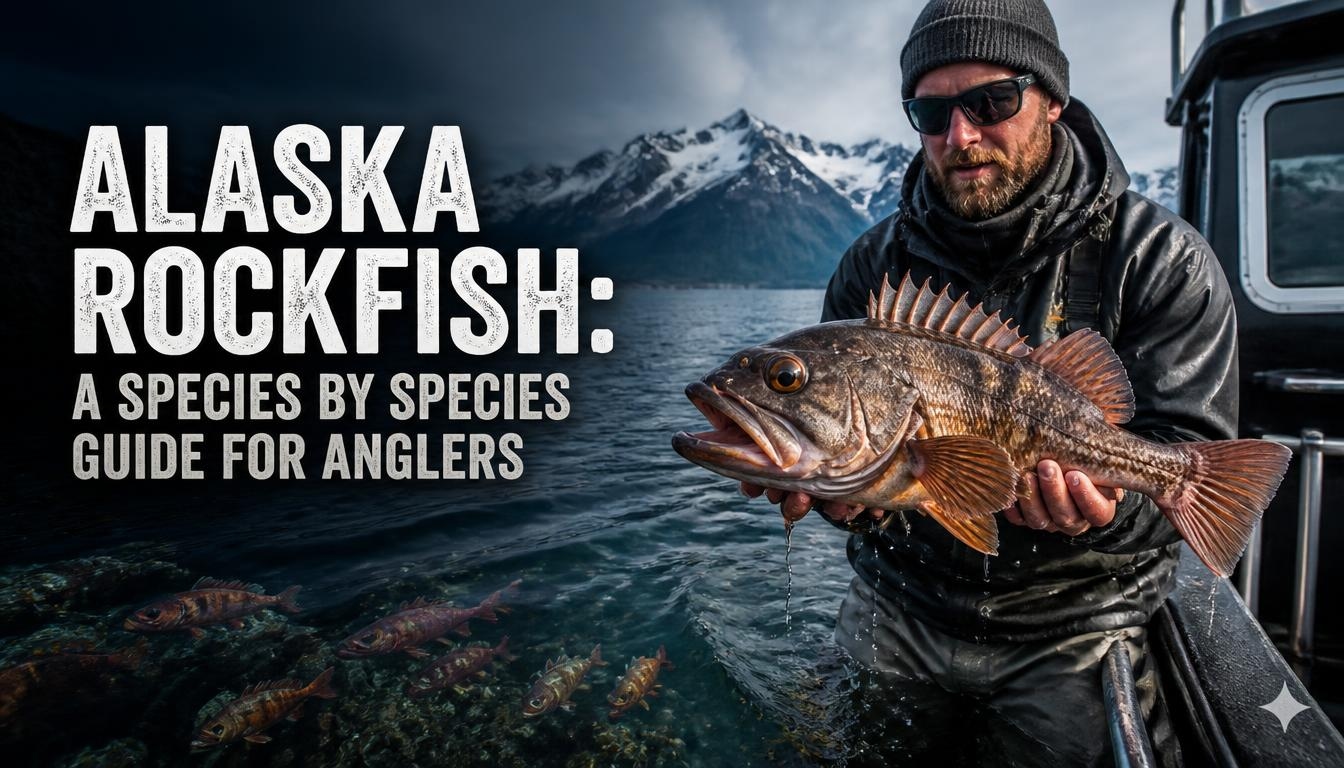
Alaska is home to over 30 species of rockfish, and if you're fishing offshore for lingcod, halibut, or salmon, chances are good you'll hook one whether you're targeting it or not. The problem: not every Alaska rockfish species can legally go in the cooler, and mishandling the ones you release can kill them even after they swim away. This guide walks through the species you're most likely to catch, how Alaska groups them for management, and what you actually need to know before you head out.
What Counts as "Alaska Rockfish"?
"Rockfish" isn't a single species it's shorthand for an entire family, Scorpaenidae, that includes about 33 recognized species in the genus Sebastes found in Alaska waters, plus three thornyhead species (genus Sebastolobus) often lumped in with them on regulations and fish tickets. That range covers everything from a 3 pound black rockfish caught 20 feet down near a kelp bed to a 47 inch shortraker rockfish pulled from nearly half a mile deep.
For anglers, the practical takeaway is simple: what you're allowed to keep, and how you're required to release what you can't, depends entirely on which rockfish species you've actually caught.
Pelagic vs Non Pelagic Rockfish: Why the Distinction Matters for Anglers
Pelagic Rockfish
Pelagic rockfish Black, Dark, Deacon, Dusky, Widow, and Yellowtail spend their time schooling in open water near rocky structure and kelp rather than sitting glued to the bottom. Black rockfish is the one you'll catch most often it's the most popular rockfish sport target across Southeast and Southcentral Alaska, and bag limits for pelagic species are generally more liberal since these fish grow faster and mature earlier than their bottom dwelling relatives.
Non Pelagic: Demersal Shelf Rockfish
This group Canary, China, Copper, Quillback, Rosethorn, Tiger, and Yelloweye lives on or near the bottom in shallower shelf waters, usually holding tight to rocky reef structure. This is the group anglers need to be most careful with: retention of demersal shelf rockfish is prohibited in many Alaska management areas, and if you catch one, current rules typically require using a deepwater release device sometimes called a descending device to return the fish to depth rather than releasing it at the surface.
Non Pelagic: Slope Rockfish
Slope species live deepest of all, generally along the continental slope well beyond typical recreational tackle range. This group includes Pacific Ocean Perch, Rougheye, Shortraker, Silvergray, Redstripe, Sharpchin, Darkblotched, Greenstriped, Northern, Bocaccio, Chilipepper, and several others. Most recreational anglers rarely encounter slope species except incidentally while bottom fishing in deep water this group is primarily targeted by the commercial trawl fishery.
Species by Species Guide: What You're Likely to Catch
Species | Group | Typical Size | Depth Range | What to Know |
Black rockfish | Pelagic | 1 to 7 lbs | Nearshore, kelp beds | Most commonly caught generous bag limits |
Dusky rockfish | Pelagic | Up to 25 in | Nearshore to shelf | Frequently mixed into pelagic catches |
Yelloweye rockfish | Demersal shelf | Up to 36 in, 24 lbs | 300 to 1,200+ ft | Retention often prohibited needs a descending device |
Quillback rockfish | Demersal shelf | Up to 24 in | Nearshore rocky reef | Retention often prohibited in state waters |
China rockfish | Demersal shelf | Up to 17 in | Nearshore rocky reef | Distinctive black body with yellow stripe |
Pacific Ocean Perch | Slope | Up to 20 in | 300 to 1,600+ ft | Mostly a commercial catch, not recreational |
Rougheye rockfish | Slope | Up to 30 in | 300 to 2,700+ ft | Rare on rod and reel extremely long lived |
Shortraker rockfish | Slope | Up to 47 in | 300 to 2,700+ ft | Largest Alaska rockfish deepwater catch |
The Species You'll Actually Deal With on the Water
Black rockfish is your bread and butter Alaska rockfish. It reaches maturity around 6 to 8 years old, lives to roughly 50 years, and is a live bearer like every other species in the family. Feeding mostly on zooplankton, crab larvae, herring, and sand lance, black rockfish school aggressively around kelp and rocky structure, which is exactly why they're so easy to target and so easy to over harvest locally if a spot gets hit hard.
Yelloweye rockfish is the fish every Alaska angler needs to be able to identify on sight, because getting it wrong can mean an illegal retention. Bright yellow eyes and a deep orange red body make it fairly distinctive, and it can live well past 100 years in some cases documented near 150. That extreme age is exactly why so many areas prohibit keeping it.
Quillback rockfish causes more accidental releases (and accidental keeps) than almost any other species, since it's commonly caught while targeting black rockfish or lingcod in the same rocky habitat. Learn to recognize its mottled brown and yellow pattern before you go, since retention rules for quillback are tight in much of the state.
Where to Find Rockfish in Alaska
Rockfish distribution tracks closely with rocky, structure heavy bottom across Alaska's coastal waters, from the Aleutian Islands and Bering Sea down through the Gulf of Alaska and into Southeast Alaska's protected inside waters. Southeast Alaska around Ketchikan, Sitka, and Juneau sees especially heavy pelagic rockfish activity around kelp beds and nearshore reefs, making it a go to region for black rockfish specifically. Deeper demersal shelf and slope species are found further offshore and at much greater depth, which is part of why they're encountered far less often by recreational anglers than pelagic species are.
Handling, Descending Devices & Barotrauma
This is the section that actually matters if you want released rockfish to survive. Rockfish caught from any real depth experience barotrauma the rapid pressure change as they're reeled up causes their swim bladder to expand, often pushing their stomach out through their mouth and making it physically impossible for them to swim back down on their own. A rockfish released at the surface in this condition will almost certainly die, even if it swims away initially.
That's exactly why current regulations in many areas require a deepwater release device a weighted clip or box that carries the fish back down to the depth it was caught (or a required minimum depth) before releasing it, letting the swim bladder re compress. It's mandatory gear to have onboard in many parts of Alaska when targeting species like yelloweye that carry retention restrictions, and it can take four to five pounds of lead to get a large yelloweye rockfish back down. If you're fishing rocky structure at any real depth, having one rigged and ready before you start is non negotiable, not optional.
Current Bag Limits & Retention Rules
Bag and possession limits vary sharply by species group and by specific management area within Alaska, so treat any number here as a starting point, not a final answer:
- Pelagic rockfish (Black, Dark, Deacon, Dusky, Widow, Yellowtail): generally more generous daily limits given faster growth and shorter lifespans.
- Demersal shelf rockfish (Canary, China, Copper, Quillback, Rosethorn, Tiger, Yelloweye): retention is prohibited outright in many areas where it is allowed, limits are typically very restrictive, and a deepwater release device is required for any that must be released.
- Slope rockfish (Pacific Ocean Perch, Rougheye, Shortraker, and others): managed primarily through the commercial groundfish fishery, with limited recreational interaction.
Always check current Alaska Department of Fish and Game regulations for your specific fishing area before you head out rules can and do change between seasons and between adjacent management areas.
FAQ
How many rockfish species are in Alaska?
About 33 recognized species in the genus Sebastes, plus three thornyhead species, adding up to more than 30 rockfish species overall in Alaska waters.
What's the most common rockfish an Alaska angler will catch?
Black rockfish, by a wide margin it's the most popular and most frequently targeted rockfish species in Southeast and Southcentral Alaska.
Do I need a descending device to fish for rockfish in Alaska?
In many areas, yes, especially if you're targeting demersal shelf species like yelloweye that carry retention restrictions releasing a deep caught rockfish at the surface without one is likely to kill it due to barotrauma.
Can I keep a yelloweye rockfish if I catch one?
Often not. Retention of demersal shelf rockfish, including yelloweye, is prohibited in many Alaska management areas due to their slow growth and extreme longevity check current area specific rules before fishing.
What's the difference between pelagic and non pelagic rockfish for bag limits?
Pelagic species typically carry more generous limits because they grow faster and mature earlier. Non pelagic species, especially demersal shelf rockfish, face much tighter restrictions or outright retention bans.
How deep do I need to fish to catch rockfish in Alaska?
It depends on the species pelagic species like black rockfish are often caught in shallow water near kelp beds, while non pelagic demersal and slope species live from a few hundred to well over a thousand feet down.
Are rockfish good to eat?
Yes, legally retained rockfish have firm, mild white flesh and are popular for fish tacos and fish and chips just confirm the species and size are legal to keep in your area first.
Conclusion
Fishing Alaska rockfish effectively comes down to knowing which group you're dealing with before you set the hook pelagic species you can generally keep without much worry, and non pelagic demersal shelf species that demand careful identification, a descending device, and a close read of current local rules. Get the species ID right and you'll keep both your catch and the fishery in good shape for next season. For a deep dive into one of the trickiest species to identify correctly, check our full Yelloweye Rockfish guide l, or browse the Fish Species library for more identification guides.