HomeBlogHalibut vs Flounder: 12 Differences Every Fish Lover Should Know

Halibut vs Flounder: 12 Differences Every Fish Lover Should Know

If you visit any seafood market, you’ll often notice two flatfish that are scratching their heads out of shoppers: halibut and flounder.

At a single glance, they look similar. Both have flat bodies, but once you noticed a little closer, you’ll realize they’re quite different in terms of size, taste, feel, nutrition, cost, and even the ways to cook.

If you have confusions which fish have a place on your dinner table, knowing the difference between halibut and flounder can assist you in making a better selection.

In this blog, we’ll differentiate Halibut vs Flounder in every aspect, so you’ll know precisely which fish suits your table.

Quick Comparison: Halibut vs Flounder

Feature

Halibut

Flounder

Family

Largest flatfish

Group of flatfish

Estimated Size

20–100+ pounds

1–5 pounds

Feel

Stiff and meaty

Soft and delicate

Taste

Mild with sweetness

Mild and buttery

Calories

Little higher

Lower

Protein

Very high

High

Fat value

Less fat

Very low

Price

High

Under budget

Best Cooking way

Grilled, roasted, baked

Fry, baked, steamed

As they belong to the flatfish family, but the differences become noticeable when placed on your plate.

What Is Halibut?

If you’re asking what halibut is, take it as the overweight flatfish. Halibut is the largest flatfish of the oceans. Its genus is Hippoglossus and is famous for its giant size, thick slices, and rich meat.

They have two main species:

  • Pacific Halibut
  • Atlantic Halibut

Pacific halibut is common in seafood markets because Atlantic halibut populations are protected for conservation.

Like other fish, halibut start life swimming upright, as most young fish. It’s become the reason of hunting it. Adult halibut live in deep, cold waters and can live for several decades. Some have more than 500 pounds in weight, which makes it the giant edible flatfish in the world.

One reason chefs love halibut is its adaptability. Its thick, stiff flesh holds up easily whether it’s barbecued, roasted, baked, or pan-fry. Even beginners find it easier to cook.

What Is Flounder?

People ask: what is flounder?

Flounder is a name used for many flatfish species sourced in saltwater environments.

Like halibut, flounder also lie on the seabed. Its flat body helps it to hide from predators. Most flounder species remain small throughout their lives. While giant halibut may weight as a human body, many flounders are small and can serve on a dinner plate.

The meat of flounder is thin, white, and soft. Its mild taste makes it popular for people who don’t enjoy seafood. Because of its softness, flounder cooks fast and blends in light recipes with butter, herbs, garlic, lemon, or breadcrumbs.

It can be served as:

  • Fry slices
  • Fish tacos
  • Baked dishes
  • Grilled cuisines
  • Steamed recipes

Its taste is good for children and new seafood eaters.

Halibut vs Flounder: 12 Key Differences

They both have the same flat body shape, but they are different. Let’s be aware of each difference in detail.

1. Size

When comparing halibut vs flounder size, the difference is noticeable. Halibut is the largest flatfish species on Earth. It may weight 20 to 100 pounds, while exceptional individuals can exceed 300 pounds. It can weigh over 500 pounds.

Flounder as compared to halibut, is much smaller. Mostly weigh only 1 to 5 pounds. This size affects everything from fishing methods to the thickness of the fillets.

Winner: Halibut for giant size; Flounder for convenient portion sizes.

2. Appearance

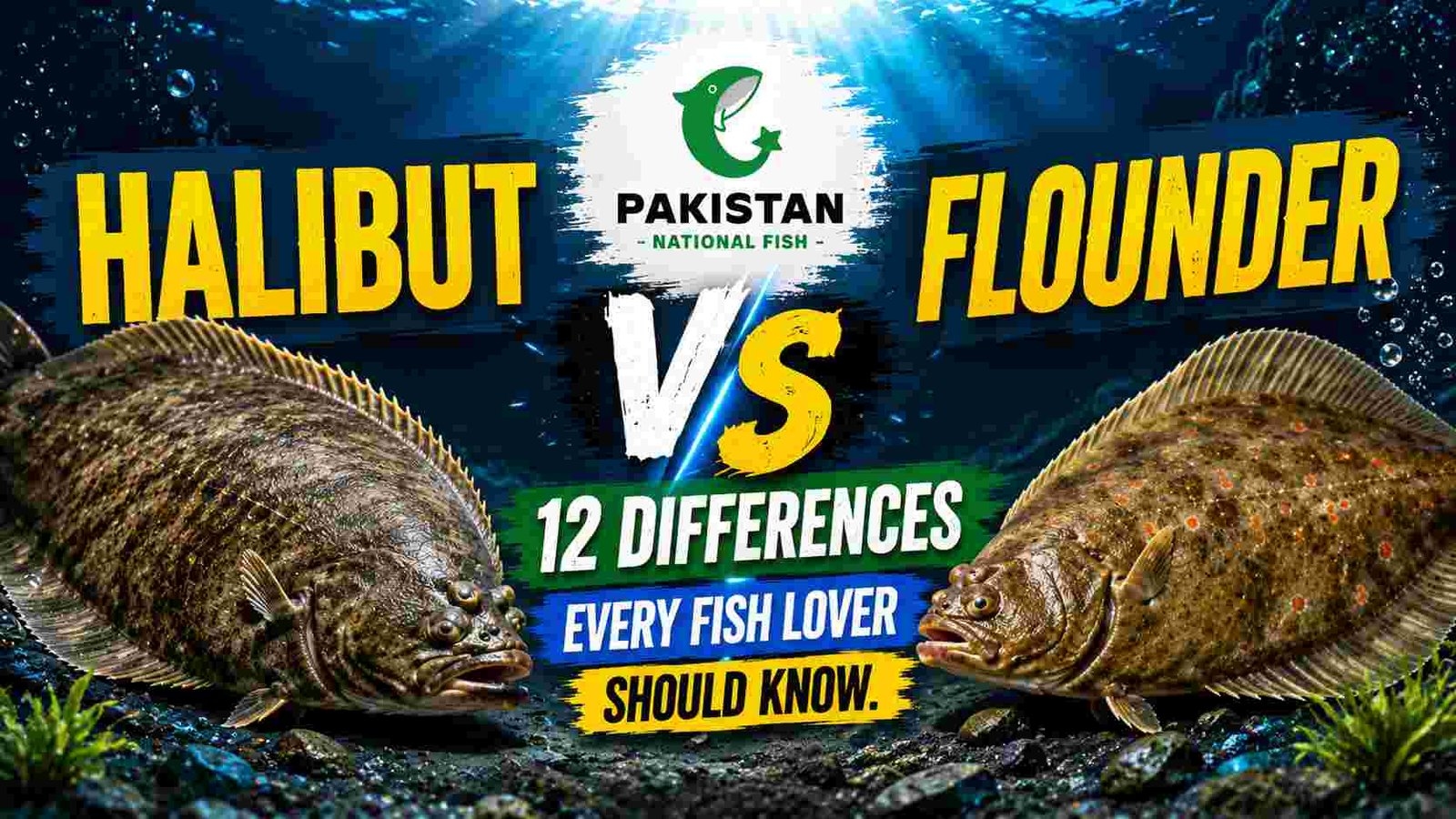
As both fish belong to the flat family, they seem variable. Halibut is a diamond-shaped fish with rich flesh. Its upper body is mostly dark olive, gray, or brown, and white colour from lower side.

Flounder possesses a rounded body and is a lean fish. These species have brown, green, tan, and black spots. Another fascinating similarity is their eyes. Both species have eyes on one side of their head.

3. Habitat

Both fish live on the bottom, but their habitats are different. Halibut generally love colder, deeper waters in the Oceans. Flounder are adaptable. According to the species, they may be found on coasts, bays, estuaries, sandy beaches, river mouths, or offshore seabeds.

4. Halibut vs Flounder Taste

When comparing halibut vs flounder taste, halibut has a sweet taste with a meaty bite. Its texture feels firm, it is the best option for filling meals.

While flounder is light and delicate. It has a soft, buttery flavor and can mix well with lemon, garlic, parsley, or butter. It easily absorbs marinades and sauces.

Here’s a simple way to choose it:

  • Choose halibut for fullness diet.
  • If you want something light, tender, and easy to enjoy, flounder should be selected.

5. Texture

Texture plays a great role when cooked. Halibut is popular for its thick flesh. The slices are thick. Even after cooking, the meat remains firm without becoming soft.

Flounder has a finer texture. Its fillets are lean, soft, and flaky, which cook very easily. Flounder is ideal for night meals, it also means it cooks carefully.

6. Halibut vs Flounder Nutrition

Both fish are healthy for a diet, but there are a few nutritional variations.

Nutrient

Halibut

Flounder

Calories

Nearly 110–120

Approx 90–100

Protein found

22–24 g

18–20 g

Fat value

2–3 g

1–2 g

Carbohydrates found

0 g

0 g

Vitamin B12 amount

Excellent source

Excellent source

Selenium value

High

High

Phosphorus amount

High

High

Omega-3 Fatty Acids

Good

Moderate

If comparing halibut vs flounder nutrition, halibut is rich in protein and healthy fats, while flounder possesses low calories and fat, ideal for diet plans. Both fish give essential vitamins and minerals that support health.

7. Halibut vs Flounder Health Benefits

When comparing halibut vs flounder health benefits, you’ll observe more similarities than differences.

  • Excellent for Lean Protein
  • Supports Heart
  • Rich in Vitamins
  • Brain Function supporters
  • Weight-maintenance journey

8. Cooking Methods

One reason both fish are famous is their versatility in the kitchen.

Best Ways to Cook Halibut

Because of its meaty and firm texture, halibut is perfect for:

  • Grilling
  • Pan-frying
  • Baking
  • Broiling
  • Roasting
  • Fish steaks
  • Kebabs

Its stiff flesh holds together well, even over high heat.

Best Ways to Cook Flounder

Flounder’s delicate texture make its cooking methods, including:

  • Pan-fry
  • Oven baked
  • Smoked
  • Air frying
  • Stuffed fish dishes
  • Fish tacos
  • Lemon butter recipes

Since flounder cooks early as compare to halibut.

9. Availability

Its presence is also crucial in comparing the difference between halibut and flounder. Halibut is counted as a best fish and isn’t always available.

But fresh halibut may be available during certain times of the year, but frozen fillets are available. Flounder is easy to find, seafood markets contain fresh or frozen flounder throughout the year.

10. Halibut vs Flounder Price

Your budget plays a great role on your shopping cart; you’ll observe clear variations of prices between these two fish.

When comparing halibut vs flounder price, halibut is the more expensive option. Its larger size, slow growth, limited seasons, and high demand all contribute to its high prices.

Flounder is more affordable and available widely. Because there are many flounder species around the world, which keep prices lower.

If you’re preparing seafood for a large family, flounder is normally the more budget-friendly option without sacrificing taste.

Typical Price Comparison

Fish

Average Price

Halibut

Premium-priced

Flounder

Budget-friendly or average priced

Prices changes according to location, season, the fish species, and local market conditions.

11. Sustainability and Fishing

Sustainability is important in seafood also. Halibut fisheries are managed under strict rules. Their quotas, seasons, and size help maintain healthy fish populations and save future supply. Choosing sourced halibut from certified fisheries is one of the best ways to support conservation of seafood.

Flounder conservation varies as they are available in different regions. Some fisheries are well arranged, while others may face challenges. Making known selections ensures future availability.

12. Best Uses in the Kitchen

Both fish are versatile, but each sparkles in different recipes.

When Halibut Is the Better Choice

Because of its firm texture, It’s an ideal option for:

  • If grilled
  • Roasted pieces
  • In burgers
  • For skewers
  • Pan dishes
  • Mediterranean cuisines
  • Garlic butter blends
  • Herb-crusted slices

When Flounder Is the Better Choice

Flounder’s softer feel makes is better for lighter foods.

Known recipes include:

  • Pan-fried 
  • Lemon butter mixture
  • Fish tacos
  • Crispy fillets
  • Stuffed flounder
  • Steamed fish
  • Air-fried seafood
  • Baked fishes 

As it cooks in a few minutes, flounder is ideal for busy dinners.

Which Fish Should You Choose?

After comparing all aspects, you may be confused about which one deserves a place on your plate. It depends on your personal choice, cooking style, and budget.

Choose halibut if you:

  • Like thick, hearty fillets
  • Enjoy roasting fish
  • Want higher protein
  • Can afford premium seafood
  • Need a fish that stays firm

Choose flounder if you:

  • Like soft, delicate fish
  • Want a lighter meal
  • Prefer quick cooking recipes
  • Need budget-friendly
  • Enjoy mild flavors that pair well with herbs and sauces

Both fish are healthy, delicious, and versatile. It’s all about your mood and celebration, which should be the perfect fish for the dinner table.

Frequently Asked Questions (FAQs)

1. What is the main difference between halibut and flounder?

The biggest difference between halibut and flounder is their size and texture. Halibut is the largest flatfish. Flounder is smaller, with thin, soft slices. They both have a mild taste, halibut is meaty, and flounder is creamy.

2. Is halibut healthier than flounder?

During comparison, halibut contains more protein and omega-3 fatty acids. Flounder normally contains low calories and fat. Both are healthy and rich sources of protein, vitamins, and essential minerals. As both fish offer valuable nutrients and gives propotionate diet.

3. Which fish tastes better, halibut or flounder?

If you’re discussing taste, halibut has a mild, slightly sweet flavor with a firm texture. Flounder has a gentle, buttery taste with  tenderness.

4. Why is halibut more expensive than flounder?

Halibut is generally costly because its growth is slow, larger in size, and its thick fillets and premium fame also increase demand.

Flounder is widely available and have many different species, which keep it affordable for daily eaters.

5. Which fish is better for grilling?

Halibut is the better option for grilling. It is suitable for grilled steaks, kebabs, and barbecue recipes. Flounder is delicate, so it is good for baking, pan-frying, steaming, or air frying.

Final Thoughts:

Choosing between Halibut vs Flounder is not so complex. As both have same flat family and a mild taste, each fish have its own uniqueness. Halibut is highlighted because of its size, texture and protein value. Flounder posses soft, buttery taste, low calorie, with affordable price.

The exact option depends on your need. If you want a special meal then halibut ranks at the top. If you’re thinking for routine, budgeted food, then flounder is under your convenience. Anyway, both fish are nutritious, delicious, and worthy additions to a healthy seafood diet.

RELATED ARTICLES
- Advertisment -

Most Popular

Recent Comments