
What Is Fisheries Science? A Beginner's Guide
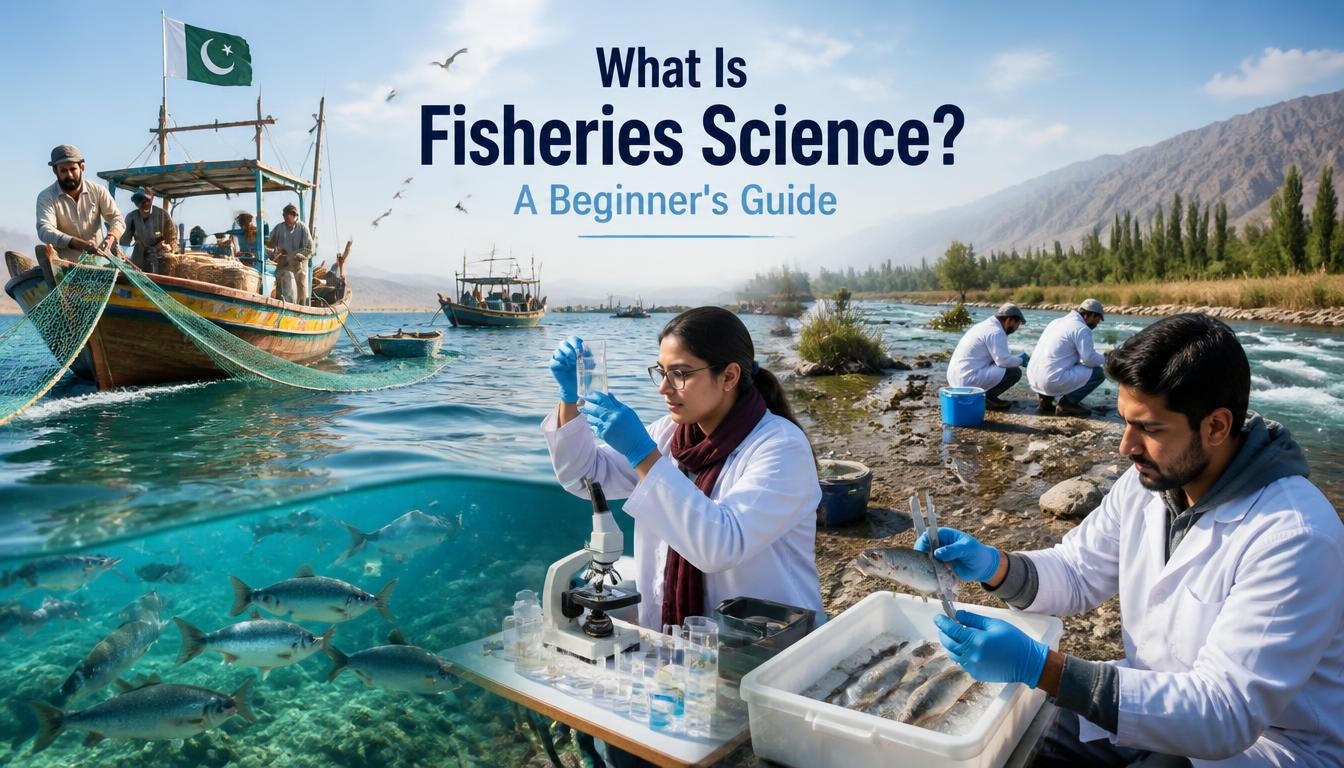
If you've grown up eating Rohu at a family dinner or seen fishing boats lined up along the Karachi coast, you've already brushed up against fisheries without realizing it. But what actually is fisheries science, and why does a country like Pakistan with the Indus river system running through its heart and a long Arabian Sea coastline care so much about it? This guide breaks down the basics in plain language, no biology degree required.
What Is Fisheries Science?
Fisheries science is the study of fish populations and the ecosystems, people, and industries connected to them. It sits at the crossroads of biology, environmental science, and economics. Anyone learning about fisheries for the first time is usually surprised to find out how much ground the field covers it's not just "counting fish." Fisheries scientists track how many fish are in a river or ocean, how fast they reproduce, how healthy their habitat is, and how much can be caught each year without wiping out the population.
In Pakistan specifically, this means studying native species like Palla and Rawas in the Indus system, as well as marine stocks along the coast that support commercial fishing.
The Main Branches of Fisheries Science
Fisheries science isn't one single discipline it's really a cluster of related fields working together.
Capture Fisheries vs. Aquaculture
- Capture fisheries deal with fish caught in the wild rivers, lakes, and the open sea. This is the traditional image most people have of "fishing."
- Aquaculture (fish farming) is the controlled breeding and raising of fish in ponds, tanks, or enclosed water bodies. Pakistan's aquaculture sector has grown steadily as wild catch alone can't meet rising demand.
Both branches rely on the same underlying science: understanding growth rates, water quality, disease, and reproduction.
Stock Assessment and Management
This branch focuses on a simple but critical question: how many fish can be caught before a population can't recover? Scientists use data on catch size, fish age, and reproduction rates to set limits that keep fisheries sustainable for the long run.
Common Fishery Activities in Pakistan
When people talk about fishery activities, they usually mean the day to day and seasonal work that keeps the industry running. In Pakistan, this includes:
- Small scale and commercial fishing along the Arabian Sea coast
- River and inland fishing across the Indus basin
- Fish farming and hatchery operations
- Processing, packaging, and export of seafood
- Research and monitoring by fisheries departments and universities
Each of these activities depends on fisheries science to stay productive a fish farm needs to know feeding and stocking rates, while a coastal fishing community needs to know which seasons and areas to avoid to prevent overfishing.
Fisheries and Fishing: What's the Difference?
It's easy to use "fisheries" and "fishing" interchangeably, but they're not quite the same thing. Fishing and fisheries are related but distinct: fishing is the act of catching fish, while a fishery is the broader system the species, the location, the people, and the rules that govern that catching activity. For example, "the Indus Rohu fishery" refers to the entire set of resources, stakeholders, and regulations tied to catching Rohu in the Indus system, not just the physical act of casting a net.
Understanding this distinction matters because most of the science and policy work in this field is aimed at managing the fishery as a whole, not just individual fishing trips.
Why Fisheries Science Matters for Pakistan
Fisheries already play a real role in Pakistan's food supply and export economy, and that role is only growing as demand for seafood rises. Fisheries science matters because it helps:
- Keep fish populations from collapsing due to overfishing
- Support the livelihoods of coastal and riverside fishing communities
- Guide safe and profitable aquaculture practices
- Inform food safety and nutrition standards for seafood sold locally and abroad
- Track the effects of pollution and climate change on rivers and coastal waters
Without this science, decisions about fishing seasons, catch limits, and farming practices would essentially be guesswork.
FAQs
1. What does a fisheries scientist actually do?
A fisheries scientist studies fish populations, water quality, and ecosystems to understand how healthy a fishery is and to recommend sustainable catch limits or farming practices.
2. Is fisheries science the same as marine biology?
Not exactly. Marine biology studies ocean life broadly, while fisheries science focuses specifically on fish populations that are harvested, farmed, or managed by people.
3. Why is fisheries management important?
Without management, fish stocks can be overfished faster than they reproduce, leading to population collapse, job losses, and food security problems.
4. What is the difference between a wild fishery and aquaculture?
A wild fishery relies on naturally occurring fish populations, while aquaculture involves breeding and raising fish in a controlled environment like ponds or tanks.
5. How does fisheries science affect the fish I eat?
It directly shapes what's available, how it's caught or farmed, and how safe it is from catch limits that prevent overfishing to water quality standards that keep farmed fish healthy.
Final Thoughts
Fisheries science might sound technical, but at its core it's about making sure there are still fish in the water and on the plate for generations to come. Whether you're curious about the Indus river's native species or Pakistan's growing aquaculture industry, understanding the basics of fisheries gives you a much better picture of where your seafood actually comes from.
Want to go deeper? Browse our Fisheries & Aquaculture guides for more on Pakistan's fishing industry and fish farming practices.