What Is a Fish Farm and How Does It Actually Work?
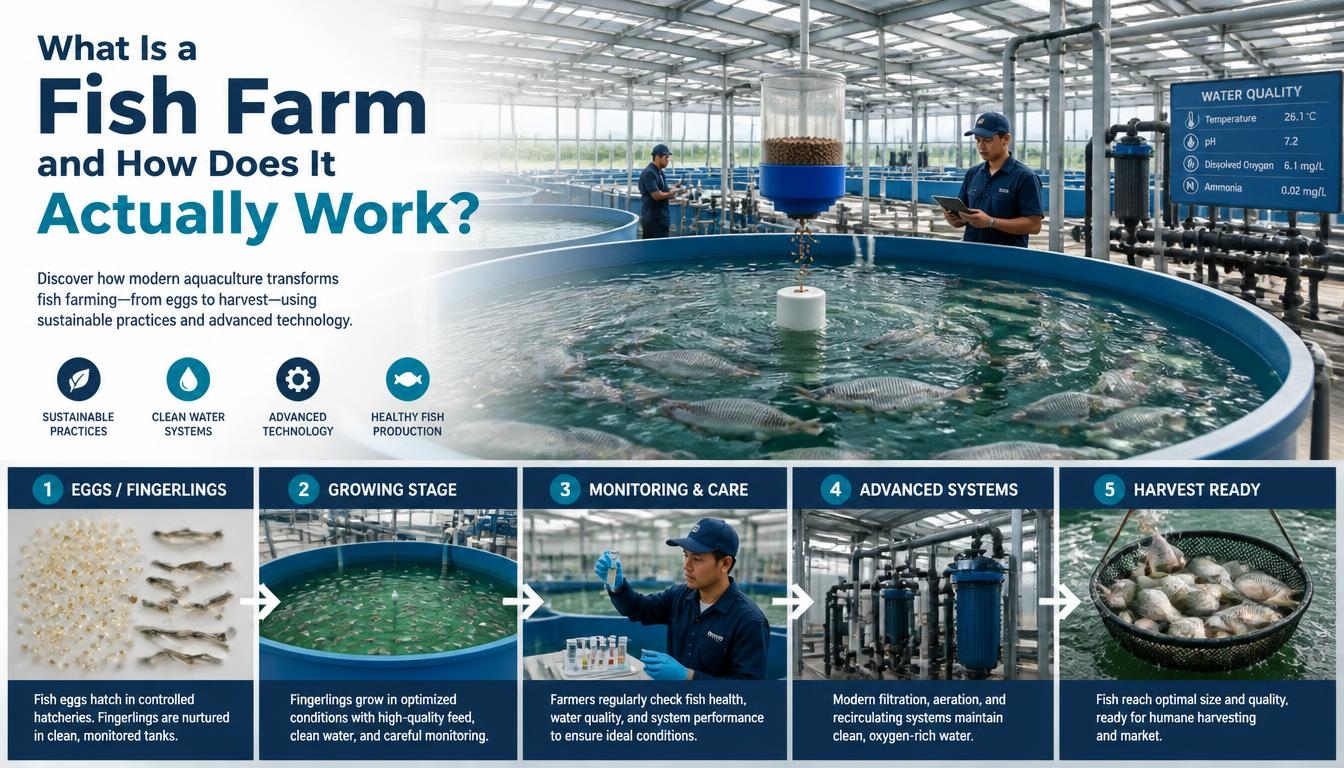
More than half of the seafood eaten worldwide today never touched open ocean it came from a fish farm. But what does that actually mean in practice? A fish farm is a facility where fish are raised in a controlled environment, from egg or fingerling all the way through to harvest, rather than caught from rivers, lakes, or the sea. Here's what a fish farm actually is, the main types in use today, and a step by step look at how one runs from start to finish.
What Is a Fish Farm?
A fish farm is any operation dedicated to raising fish in a managed setting a pond, tank, cage, or enclosed system for food, stocking, or sale, rather than relying on wild capture. It's the physical site where aquaculture happens, ranging from a single family pond producing a few hundred fish a year to sprawling commercial operations producing thousands of tonnes.
The scale of this industry has grown dramatically: farmed fish now make up roughly half of all seafood consumed globally, a share that has climbed steadily for decades as wild fish stocks have come under increasing pressure and global demand for seafood has kept rising.
The Main Types of Fish Farms
Fish farms generally fall into four categories, each suited to different locations, budgets, and species:
• Pond farms the most common setup worldwide, using earthen or lined ponds and relying partly on natural food sources like plankton alongside commercial feed.
• Cage farms net enclosures placed in existing lakes, rivers, or coastal waters, letting fish grow in a natural water body while staying contained.
• Recirculating Aquaculture Systems (RAS) indoor tank systems that filter and reuse water continuously, enabling high density farming even without natural water access.
• Biofloc systems a tank based method that uses bacteria to convert fish waste into supplemental feed, cutting down on water use.
Each system comes with its own setup costs, species suitability, and management demands for a detailed walk through of site selection, stocking, and costs, see our Cultivation of Fish beginner's guide.
How a Fish Farm Actually Works, Step by Step
At its core, every fish farm regardless of size or system runs through the same basic cycle:
- Stocking. The farm is stocked with young fish, either fry (newly hatched) or fingerlings (slightly older juveniles), typically sourced from a hatchery rather than bred on site.
- Feeding. Fish are fed a diet suited to their species and life stage often a mix of natural food sources and commercial pelleted feed on a regular schedule tuned to maximize growth while minimizing waste.
- Water and health monitoring. Farmers regularly test water quality (oxygen, pH, ammonia) and watch for signs of disease or stress, since water conditions directly drive growth rates and survival.
- Growth cycle. Fish are periodically sampled and weighed to track growth against targets, with stocking density and feeding adjusted as needed. Most farmed species reach market size in 6 to 12 months, depending on species and conditions.
- Harvesting. Once fish reach target size, they're harvested by draining or netting ponds, or removing cage/tank stock usually timed to market demand or seasonal cycles.
- Processing and sale. Harvested fish are then processed (cleaned, filleted, or packaged) and moved into the supply chain, heading to local markets, wholesalers, or export buyers depending on the scale of the operation.
Fish Farms vs. Wild Fishing: Key Differences
| Fish Farms | Wild Fishing |
Environment | Fully controlled | Uncontrolled, natural |
Supply predictability | High planned harvest cycles | Variable stock health, weather, regulation |
Environmental impact | Localized (water, waste) debated | Overfishing risk to wild stocks |
Cost structure | Ongoing feed/infrastructure costs | Fuel, labor, quota dependent |
The trade offs matter for both sides. Farms offer predictability and scalability that wild fisheries can't a farmer knows roughly when and how much they'll harvest, in a way no wild fishery ever can. Wild stocks like Northern cod show what happens when a fishery has no such control: population swings driven entirely by nature and, historically, overfishing, with no way to simply "restock" on demand once numbers collapse. Farming isn't without its own environmental debates water use, waste discharge, and disease spread between farmed and wild populations are all active areas of research and regulation.
Why Fish Farms Matter (and Where the Fish Goes)
Fish farms exist to fill a gap wild fisheries increasingly can't close alone. As global seafood demand has grown, farmed fish has become a critical part of food security in many countries, supplying everything from local markets to major export chains.
Once harvested, farmed fish typically moves through one of a few paths: sold fresh at local markets, supplied to wholesalers and processors for packaged or frozen products, or exported to international markets where demand and prices are often higher. Larger commercial farms frequently operate under contracts with specific buyers, while smaller farms tend to sell more directly into local supply chains.
FAQ
What is a fish farm in simple terms?
A fish farm is a facility a pond, tank, or cage system where fish are raised in a controlled environment from young fish through to harvest, rather than caught in the wild.
How do fish farms get their fish?
Most fish farms stock young fish, called fry or fingerlings, sourced from a hatchery, rather than breeding fish on site.
Is farmed fish as healthy as wild fish?
Both farmed and wild fish can be nutritious choices nutritional content varies more by species and diet than by whether the fish was farmed or wild caught.
How long does a full fish farm cycle take, from stocking to harvest?
Most farmed species reach harvest size in 6 to 12 months, depending on the species and how well growing conditions are managed.
What's the difference between a fish farm and a hatchery?
A hatchery specializes in breeding and raising fish through their earliest life stages before they're transferred elsewhere, while a fish farm raises fish from that juvenile stage through to harvest size.
Do fish farms harm the environment?
It depends on the system and how it's managed factors like water use, waste discharge, and disease control vary widely, and are active areas of regulation and ongoing research.