
The Ultimate Beginner's Fishing Guide
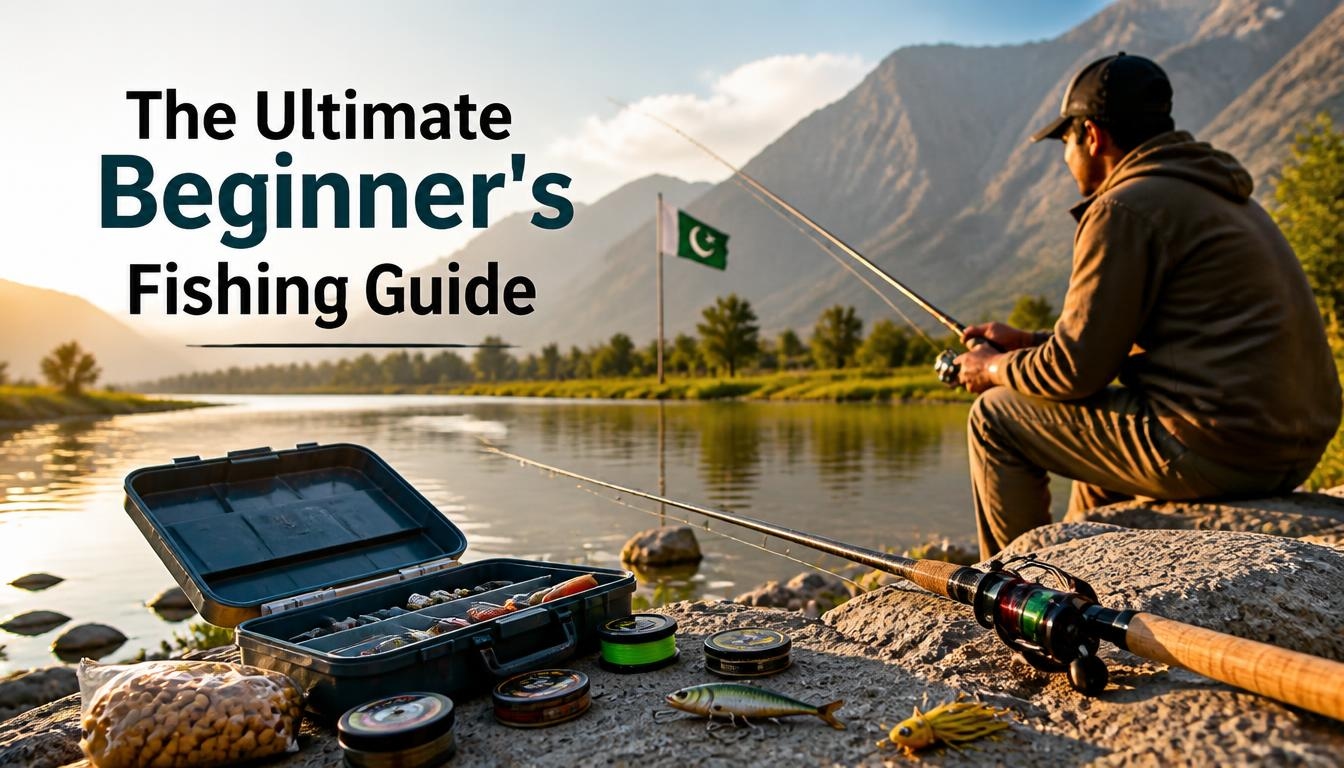
Every angler started exactly where you are now holding a rod for the first time and wondering where to even begin. This fish guide covers everything a genuine beginner needs: the gear that actually matters (and what you can skip), how to cast, how to read water, how to tell when a fish is actually biting, a couple of knots you truly can't skip, and a dedicated section on getting started with species fishing here in Pakistan.
What You Actually Need to Start Fishing: Basic Gear
Rod & Reel
A beginner doesn't need much: a medium action spinning rod paired with a spinning reel is the standard, forgiving starting setup, easy to cast and versatile enough for most freshwater species you'll encounter as a beginner. Avoid the temptation to buy specialized gear before you know what kind of fishing you actually enjoy a general purpose combo covers the vast majority of early fishing trips.
Line, Hooks & Terminal Tackle
Monofilament line is the easiest for beginners to handle, tie knots with, and see on the spool, even if more experienced anglers eventually move to fluorocarbon or braided line for specific situations. A basic assortment of hooks in a few sizes, some small weights (sinkers) to get your bait down to where fish are actually holding, and a handful of bobbers or floats to detect bites round out a beginner's terminal tackle kit.
Bait vs Lures
Live or natural bait worms, insects, or small pieces of dough or bread depending on target species is generally the easiest and most forgiving way to start, since it does most of the work of attracting fish on its own. Lures require more technique to work effectively (retrieving them in a way that mimics real prey movement), so most beginners get more consistent early success with natural bait before graduating to lures as their skills develop.
Learning to Cast: The Basic Motion
Casting intimidates more beginners than it should. With a spinning reel, the basic motion is: open the bail (the wire loop that releases line), hold the line against the rod with your index finger, bring the rod back smoothly over your shoulder, then snap it forward while releasing your finger at roughly the ten to eleven o'clock position of the rod's arc. Practicing this motion in an open space without a hook attached just a practice weight before your first real trip will save you a lot of frustration and tangled line once you're actually on the water.
Reading Water: Where Fish Actually Are
Fish don't distribute themselves randomly, and learning to read water is one of the fastest ways to improve your results as a beginner. Look for structure rocks, fallen trees, weed beds, or drop offs where depth changes suddenly since fish use these features for cover and ambush points rather than sitting in open, featureless water. Shaded areas, especially during bright midday sun, often hold more fish than open sunny stretches. Moving water, like the inflow or outflow of a pond or a river's current seams, tends to concentrate food and, with it, fish looking to feed with minimal effort.
Detecting a Bite & Setting the Hook
A bite can range from an obvious, aggressive pull to a barely perceptible twitch, and learning to tell the difference takes a bit of time on the water. Watch your line and rod tip closely any unusual movement, tension, or slack is worth paying attention to. When you do feel a genuine bite, resist the urge to jerk the rod immediately; a smooth, firm upward motion (setting the hook) once you're confident a fish has actually taken the bait works far better than a panicked yank, which often pulls the hook straight out of a fish's mouth before it's properly set.
Basic Knots Every Beginner Should Know
You genuinely only need two knots to get started. The improved clinch knot attaches your hook or lure directly to your line and is the single most useful knot for a beginner to master first, since you'll tie it constantly. The loop knot (such as a simple overhand loop or a Palomar knot) is useful when you want a lure to move more freely and naturally in the water rather than being cinched tightly against the eye of the hook. Practice both knots at home, slowly, until you can tie them without thinking fumbling with a knot while fish are actively biting is one of the most common beginner frustrations.
Getting Started Fishing in Pakistan
Pakistan offers a genuinely wide range of freshwater fishing opportunities for beginners, from stocked ponds and canals to the major rivers of the Indus system. Common species you're likely to target as a beginner include rohu, catla, and mrigal the carp species that dominate both farmed and stocked wild waters across Punjab and Sindh along with mahseer, a prized and harder fighting wild game fish found in the Indus River system for anglers ready for more of a challenge. In the cooler northern regions, including Chitral, Swat, and Gilgit Baltistan, stocked trout streams offer a different style of fishing better suited to fly or light spinning tackle. Fishing license requirements and permitted areas vary by province and specific water body in Pakistan, so it's worth checking with your local provincial fisheries department before your first trip, particularly for protected or catch and release only areas. Basic gear rods, reels, line, and hooks is widely available in most cities, making it straightforward to put together a beginner's kit locally.
Fishing Etiquette, Safety & Catch and Release Basics
A few habits will make you a better angler and a better presence on the water from your very first trip. Always check whether you need a license for the specific water you're fishing, and respect any size or bag limits in place these exist specifically to keep fish populations healthy for future trips. If you plan to release fish, handle them as little as possible and keep them in the water while removing the hook when you can, since excess handling and time out of water both reduce a released fish's chances of survival. Basic water safety matters too: wear a life jacket on a boat, be aware of slippery banks and rocks, and never fish alone in an unfamiliar or remote location without telling someone where you're going.
FAQ
What's the most important gear for a beginner angler?
A medium action spinning rod and reel combo, monofilament line, a basic assortment of hooks and weights, and natural bait to start you don't need much more for your first several trips.
Is bait or lures better for beginners?
Bait is generally easier and more forgiving for beginners, since it attracts fish with minimal technique required, while lures need more skill to retrieve convincingly.
What knot should I learn first?
The improved clinch knot, used to attach your hook or lure directly to your line it's the single most used knot in beginner fishing.
How do I know if a fish is actually biting?
Watch your line and rod tip for unusual movement, tension, or slack. Bites range from obvious hard pulls to barely visible twitches, and recognizing the subtler ones takes practice.
What fish can beginners target in Pakistan?
Rohu, catla, and mrigal are common, widely available targets in stocked ponds, canals, and rivers, while mahseer offers a bigger challenge in the Indus River system, and trout are stocked in northern streams like those in Chitral and Swat.
Do I need a fishing license in Pakistan?
Requirements vary by province and specific water body, so check with your local provincial fisheries department before your first trip.
How should I handle a fish I plan to release?
Minimize handling time, keep the fish in the water while removing the hook where possible, and avoid unnecessary time out of water, since both directly affect a released fish's chances of survival.
Conclusion
Getting started with fishing comes down to a manageable set of fundamentals the right basic gear, a reliable cast, reading water for structure and shade, recognizing a real bite, and two knots tied confidently. From there, Pakistan's own mix of stocked ponds, canal fishing, Indus River mahseer, and northern trout streams offers a genuinely varied path for a beginner to grow into. For a deeper look at identifying what you catch, see our guide on how to identify freshwater fish, or browse our Fisheries & Aquaculture section.