
Is Trout Healthy? A Full Nutrition Breakdown
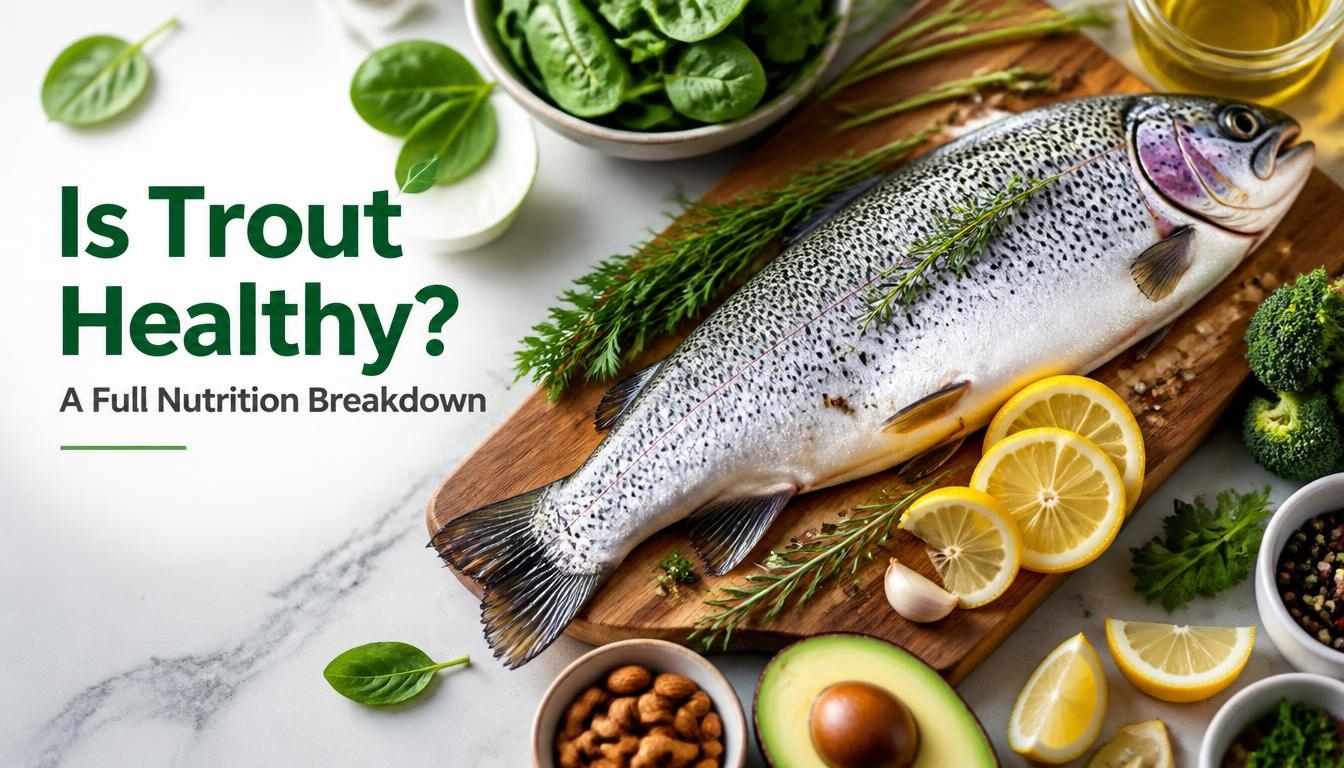
Yes trout is one of the healthier fish options available, and a strong choice for regular consumption. It's rich in high quality protein, loaded with omega 3 fatty acids, and comes with a relatively low mercury profile compared to larger predatory fish. Below is a full nutritional breakdown of trout, its key health benefits, how it stacks up against other popular fish, and a few things worth knowing before you buy.
Trout Nutrition Facts: Full Breakdown
Nutrient | Per 100g (cooked) | Per 3oz (85g) |
Calories | ~190 kcal | ~160 kcal |
Protein | ~27g | ~23g |
Total Fat | ~8g | ~7g |
Omega 3 Fatty Acids | ~1g | ~0.9g |
Vitamin D | ~80 100% DV | ~65 85% DV |
Vitamin B12 | ~200% DV | ~170% DV |
Values vary somewhat by trout species (rainbow, brown, lake) and whether the fish is farmed or wild, but the overall nutritional profile stays consistently strong across varieties: high protein, moderate healthy fat, and standout levels of vitamin D and B12 relative to most other protein sources.
Health Benefits of Eating Trout
- Heart health the omega 3 fatty acids in trout are associated with supporting healthy cholesterol levels and reducing cardiovascular risk factors.
- High quality complete protein trout provides all essential amino acids, supporting muscle maintenance and repair.
- Vitamin D one of the few natural dietary sources of vitamin D, which many people don't get enough of from sunlight or diet alone.
- Vitamin B12 essential for nerve function and red blood cell production, and trout delivers well above the daily recommended value per serving.
- Selenium and potassium trout also contributes meaningful amounts of these minerals, which support thyroid function and healthy blood pressure respectively.
How Trout Compares to Other Fish
Trout | Salmon | Tilapia | Cod | |
Calories (100g) | ~190 | ~208 | ~128 | ~105 |
Protein (100g) | ~27g | ~20g | ~26g | ~23g |
Omega 3s (100g) | ~1g | ~1.5 2g | ~0.1g | ~0.2g |
Relative Mercury | Low | Low | Low | Low |
Trout sits comfortably alongside salmon as one of the better omega 3 sources among common fish, while offering slightly fewer calories per serving. Tilapia and cod are leaner, lower fat options with less omega 3 content, making them a different nutritional trade off rather than a straightforwardly better or worse choice.
Things to Watch: Mercury, Farmed vs. Wild, Preparation
Trout generally carries low mercury levels compared to larger, longer lived predatory fish like swordfish or shark, making it a reasonable choice for regular consumption for most people, including pregnant women following standard fish safety guidance.
Farmed and wild trout both offer strong nutritional value, though farmed trout can sometimes have a slightly higher fat content depending on the feed used, which isn't necessarily a downside given that much of that fat is the same beneficial omega 3 content.
How trout is prepared matters as much as the fish itself. Baking, grilling, or pan searing with minimal added oil preserve its nutritional profile well, while heavy breading or deep frying can significantly increase calorie and unhealthy fat content, offsetting many of the benefits described above.
FAQ
Is trout healthy to eat regularly?
Yes, trout is generally considered a healthy fish to eat regularly, offering high quality protein, omega 3 fatty acids, and B vitamins with relatively low mercury levels compared to larger predatory fish.
How does trout compare nutritionally to salmon?
Trout and salmon are nutritionally similar, both offering high protein and omega 3 content, though salmon typically has a slightly higher fat and omega 3 level while trout tends to be slightly lower in calories.
Is farmed trout as healthy as wild trout?
Both farmed and wild trout offer strong nutritional profiles; farmed trout can sometimes have a slightly higher fat content depending on feed, but the core protein and micronutrient benefits remain similar.
Does trout contain mercury?
Trout generally contains low mercury levels compared to larger, longer lived predatory fish, making it one of the lower mercury fish options for regular consumption.
What's the healthiest way to cook trout?
Baking, grilling, or pan searing with minimal added oil are generally considered the healthiest preparation methods, preserving the fish's nutritional profile without adding excess calories or unhealthy fats.