
How to Become a Fisheries Biologist
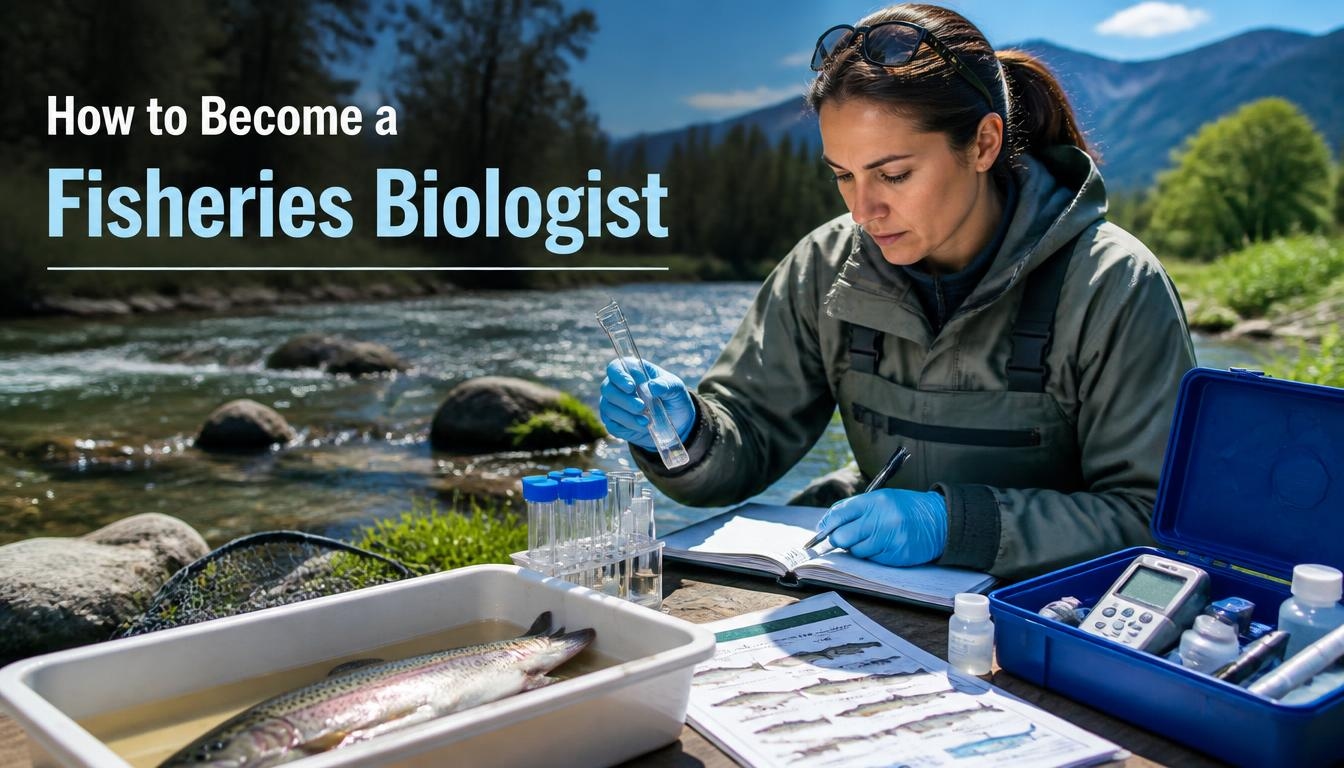
If you've ever wondered who studies fish populations, tracks the health of a river system, or helps set fishing regulations that keep a species from disappearing, that's the work of a fisheries biologist. It's a career built on fieldwork, data, and a genuine interest in aquatic life and it's more accessible than most people assume, whether you're starting from a general biology background or already know you want to study fish specifically. This guide walks through exactly how to become a fisheries biologist, step by step, including how to pursue this path through fisheries science programs in Pakistan.
What Does a Fisheries Biologist Actually Do?
A fisheries biologist studies fish populations, their habitats, and the broader aquatic ecosystems they depend on. Day to day work varies enormously by employer, but common tasks include conducting fish population surveys, collecting and analyzing water quality data, tagging and tracking fish, assessing the health of fish stocks, and contributing to fisheries management policy and conservation plans. Some fisheries biologists spend most of their time in the field wading into rivers, running boat surveys, or operating electrofishing equipment while others work primarily in labs or offices, analyzing data and writing reports that shape fishing regulations.
The term "fish biologist" is often used interchangeably with fisheries biologist, and both differ slightly from the closely related field of marine biology, which covers ocean life more broadly rather than focusing specifically on fish population science and fisheries management.
Step 1: Build the Right Foundation in High School
The path to becoming a fisheries biologist realistically starts well before university. Strong performance in biology, chemistry, and mathematics gives you the foundation for a demanding science degree later on, and any early exposure to fieldwork volunteering with a local conservation group, joining an environmental club, or simply spending time observing local waterways helps confirm this is a career you'll actually enjoy before you commit years of study to it.
Step 2: Earn a Bachelor's Degree in Fisheries Biology or a Related Field
A bachelor's degree is the minimum entry requirement for nearly every fisheries biologist position. The most direct route is a degree specifically in fisheries science, fisheries and aquaculture, or fish biology, though degrees in general biology, wildlife biology, zoology, or environmental science can also lead into the field, especially when paired with fisheries relevant coursework and field experience.
Core Coursework
Regardless of exact degree title, a strong fisheries biology program will typically include ichthyology (the study of fish), aquatic ecology, limnology (the study of freshwater systems), population dynamics, statistics, genetics, and increasingly, GIS (Geographic Information Systems) mapping since spatial data analysis is now a standard tool in fisheries research and management.
Studying Fisheries Biology in Pakistan
Pakistan has a growing number of degree programs specifically built around fisheries and aquatic biology. The University of Veterinary & Animal Sciences (UVAS) in Lahore, for example, offers a dedicated BS Fisheries and Aquaculture program covering fish breeding, disease diagnosis, sustainable farming practices, and aquatic biodiversity. Pakistan's Higher Education Commission has also developed a standardized "Fresh Water Biology and Fisheries" BS curriculum adopted across multiple public and private universities, covering ichthyology, fisheries biology, aquatic microbiology, and fish identification specific to Pakistani species. For students aiming to work in Pakistan's own aquaculture and fisheries sector which is dominated by freshwater carp farming in Punjab, Sindh, and Khyber Pakhtunkhwa these programs offer a more locally relevant path than a general biology degree alone.
Step 3: Get Field Experience Through Internships & Volunteering
Coursework alone rarely leads directly to a job offer in fisheries biology hands on field experience matters just as much, if not more. Internships with fisheries departments, wildlife agencies, conservation NGOs, or university research labs give you practical experience with sampling techniques, data collection protocols, and species identification that classroom learning can't fully replicate. Many entry level fisheries biologist positions specifically list field experience as a requirement, so building this in during or immediately after your degree is one of the highest leverage steps in the entire process.
Step 4: Consider a Master's Degree for Research Roles
A bachelor's degree is enough for many entry level fisheries biologist and technician roles, but research focused positions, university affiliated work, and more senior roles within government agencies often require a master's degree or, for leading independent research programs, a PhD. Graduate study also allows for specialization in areas like fish population modeling, aquatic toxicology, fisheries genetics, or conservation biology which can meaningfully shape which parts of the field you end up working in.
Step 5: Get Professional Certification
In countries with an established fisheries biology profession, certification adds a recognized credential on top of your degree. In the United States, for example, the American Fisheries Society (AFS) offers a two tier certification path: Associate Fisheries Professional (AFP), available to those who meet the coursework and degree requirements regardless of experience, and Certified Fisheries Professional (CFP), which additionally requires a set number of years of qualifying experience and professional development points, along with certification renewal every five years. Required coursework categories typically span fisheries and aquatic sciences, other biological sciences, physical sciences, mathematics and statistics, communications, and human dimensions of natural resource management. While not always mandatory for employment, certification can meaningfully strengthen a fisheries biologist's credentials, particularly for roles involving policy work, expert testimony, or senior positions within an agency.
Career Paths, Salary & Job Outlook
Fisheries biologists work across a range of employer types, and pay varies accordingly:
Career Stage | Typical Salary Range (USD) | Common Employers |
|---|---|---|
Entry level | ~$40,000–$55,000 | State/provincial agencies, NGOs, entry research roles |
Experienced | ~$70,000–$100,000 | Federal agencies, senior consulting roles, research institutions |
Specialized/research | Varies, often highest at PhD level | Universities, national research bodies, large consulting firms |
In the United States, fisheries biologists are grouped under the Bureau of Labor Statistics' broader "Zoologists and Wildlife Biologists" category, with employment in that group projected to grow modestly over the next decade a pace generally described as slower than average for all occupations, meaning competition for open roles, especially research positions, remains steady. Job availability and pay structures vary considerably outside the U.S., including in Pakistan, where fisheries roles are found across government fisheries departments, agricultural research institutes, and the growing aquaculture sector rather than through a single standardized salary structure.
FAQ
What degree do I need to become a fisheries biologist?
At minimum, a bachelor's degree in fisheries science, biology, wildlife biology, zoology, or a closely related field. Research focused and senior roles often require a master's degree or PhD.
Is a fish biologist the same as a fisheries biologist?
Yes, the terms are generally used interchangeably to describe someone who studies fish populations, biology, and aquatic ecosystems.
How long does it take to become a fisheries biologist?
Typically about 4 years for a bachelor's degree, plus additional time for field experience or internships. Research track roles usually require an additional 2+ years for a master's degree.
Do I need a master's degree to work as a fisheries biologist?
Not always. Many entry level and field based roles only require a bachelor's degree, but research positions, university roles, and senior agency roles frequently require a master's degree or higher.
Can I study fisheries biology in Pakistan?
Yes. Universities such as UVAS Lahore offer a dedicated BS Fisheries and Aquaculture program, and Pakistan's Higher Education Commission has approved a standardized Fresh Water Biology and Fisheries BS curriculum used at multiple universities.
What skills matter most for a fisheries biologist?
Strong field skills (sampling, species identification, water quality testing), data analysis and statistics, and increasingly GIS mapping are core skills across almost every fisheries biology role.
Is fisheries biology a growing career field?
Growth is generally described as steady but modest, so building strong field experience and, where relevant, professional certification helps candidates stand out in a competitive job market.
Conclusion
Becoming a fisheries biologist is a clear, structured path a relevant bachelor's degree, real field experience, and, depending on your career goals, a master's degree and professional certification on top. What makes the field genuinely rewarding is the fieldwork itself: population surveys, habitat assessments, and conservation work that directly shapes how fish populations are managed and protected. For students in Pakistan specifically, programs like UVAS's BS Fisheries and Aquaculture offer a direct route into the country's own growing aquaculture and fisheries sector. To learn more about that sector, see our guide to pisciculture and the science of fish farming, or browse our Fisheries & Aquaculture section.