
Florida Freshwater Fish: The Complete Species Guide
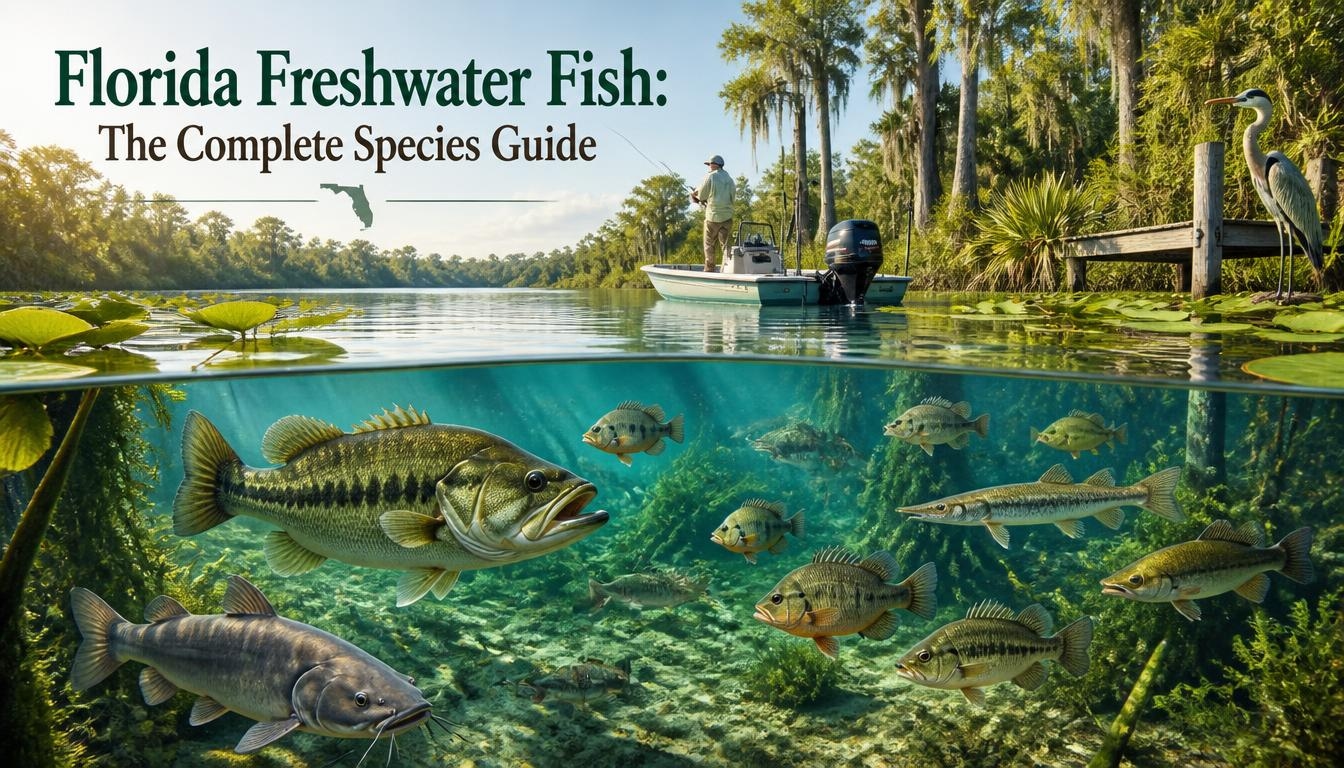
Florida's lakes, rivers, and canal systems host one of the most varied freshwater fish communities in North America and the list of Florida freshwater fish species got a genuine scientific update in 2024, when one of the state's most iconic sport fish was officially reclassified as its own species. This guide covers the major groups of Florida freshwater fish species: native black bass, panfish, catfish and other natives, and the growing population of non native species now established in South Florida's canal systems.
What Counts as a Florida Freshwater Fish?
Florida's freshwater fish community spans lakes, rivers, springs, and an extensive network of man made canals, particularly across South Florida. The state supports a genuinely diverse range of native species several types of black bass, sunfish, catfish, and ancient lineages like gar and bowfin alongside a well documented and growing list of non native species that have become established, especially in the warm, stable canal systems of Miami Dade and Broward counties.
Florida's Native Black Bass Complex And Why It Just Got More Complicated
Florida Bass vs Largemouth Bass
For decades, anglers across Florida referred to their prized big mouthed bass simply as "largemouth bass," sometimes distinguishing a local "Florida strain" variety. In 2024, the American Fisheries Society, backed by genetic research from Yale University, officially recognized the Florida bass as a separate species from the largemouth bass found throughout the rest of the country. The scientific names swapped as part of the change: Micropterus salmoides, previously the largemouth bass's scientific name, now refers specifically to the Florida bass, while largemouth bass elsewhere in the U.S. is now Micropterus nigricans. Florida bass are found throughout most of the state except the western panhandle, and the reclassification doesn't change any existing fishing regulations anglers can keep fishing for both under the same rules as before.
Other Native Black Bass Species
Florida is also home to several other members of the black bass group beyond Florida bass, including spotted bass, recognizable by red eyes and rows of belly spots; shoal bass, a striking black banded species native to the Apalachicola River system; Suwannee bass, found primarily in the Suwannee and Santa Fe rivers with a distinctive dark, chain like pattern; and Choctaw bass, a more recently distinguished species found in the state's panhandle river systems.
Florida's Panfish: Sunfish & Crappie
Panfish make up some of the most commonly caught freshwater species in Florida, prized for their abundance and table quality as much as for sport. Bluegill sunfish, recognizable by a signature black ear flap, are among the most frequently caught species in the state. Redear sunfish, sometimes called shellcrackers for their preference for snails and other shelled prey, are another popular panfish target. Black crappie, easily identified by a dark, speckled pattern, is prized both for its taste and for the challenge of finding schools in deeper water during colder months.
Other Native Florida Freshwater Fish
Beyond bass and panfish, Florida's freshwater systems support several other notable native species. Channel catfish and blue catfish are widespread and popular with anglers targeting larger table fish. Florida gar, an elongated, armor scaled predator, and bowfin, an ancient air breathing lineage often called "mudfish" locally, both represent some of the oldest fish lineages still found in North American freshwater today. Striped bass and their hybrid, sunshine bass, occur in some Florida rivers and reservoirs as well, prized by anglers for their size and fight. A small number of federally protected species, including Gulf sturgeon and Atlantic sturgeon, also occur in Florida's river systems and are subject to strict "no take" federal protections.
Non Native & Invasive Species in Florida's Canals
Florida's extensive canal network, particularly across South Florida, has become an unusual hotspot for tropical and subtropical species introduced through the aquarium trade, aquaculture escapes, and, in at least one well documented case, deliberate introduction by state wildlife managers. The butterfly peacock bass, a tropical species originally from the Amazon and Orinoco basins, was intentionally introduced into Southeast Florida canals in the 1980s specifically to help control populations of invasive spotted tilapia and it has since become a popular, aggressive sport fish in its own right, capable of growing beyond 25 pounds.
Other established non native species in Florida's canal systems include the Mayan cichlid, oscar, walking catfish, and multiple species of tilapia, most of which arrived through aquarium releases or aquaculture escapes rather than intentional stocking. More recently, bullseye snakehead and clown knifefish have become established in parts of South Florida; both are classified as prohibited invasive species, meaning anglers who catch one are required not to release it back into the water.
Comparing Florida's Most Encountered Freshwater Fish
Species | Native or Non Native | Typical Habitat | Notable Trait |
|---|---|---|---|
Florida bass | Native | Lakes, canals, rivers | Reclassified as its own species in 2024; grows larger than largemouth bass elsewhere |
Bluegill sunfish | Native | Lakes, ponds, canals | Most commonly caught panfish species in the state |
Black crappie | Native | Lakes, rivers | Prized for taste; schools in deeper water in cooler months |
Channel catfish | Native | Rivers, lakes | Widespread, popular table fish |
Florida gar | Native | Rivers, lakes | One of the state's oldest surviving fish lineages |
Butterfly peacock bass | Non native (introduced) | South Florida canals | Introduced in the 1980s to control invasive tilapia; grows over 25 lbs |
Bullseye snakehead | Non native (invasive) | South Florida canals | Prohibited species; must not be released if caught |
Regulations Overview
Fishing regulations for Florida freshwater fish are managed by the Florida Fish and Wildlife Conservation Commission (FWC), and rules vary by species, water body, and whether a species is native or classified as invasive. Native sport fish like Florida bass, panfish, and catfish are managed through standard bag and size limits. Established non native sport species like the butterfly peacock bass carry their own specific catch limits, with FWC encouraging catch and release for larger individuals to preserve the fishery. Prohibited invasive species such as bullseye snakehead must never be released once caught, since returning them to the water only helps them spread further. Always check current FWC freshwater fishing regulations for your specific water body before heading out, since rules can differ meaningfully between regions and individual lakes.
FAQ
Is a Florida bass the same fish as a largemouth bass?
They're closely related but now officially classified as separate species. In 2024, the American Fisheries Society recognized Florida bass (Micropterus salmoides) as distinct from largemouth bass (Micropterus nigricans), based on genetic research. Florida bass are found through most of the state except the western panhandle.
What is the most commonly caught freshwater fish in Florida?
Bluegill sunfish is among the most frequently caught species statewide, alongside Florida bass and black crappie.
What are the non native fish found in Florida's canals?
Established non native species include butterfly peacock bass, Mayan cichlid, oscar, walking catfish, and multiple tilapia species, along with more recently established species like bullseye snakehead and clown knifefish.
Why was the peacock bass introduced to Florida?
The FWC intentionally introduced butterfly peacock bass into Southeast Florida canals in the 1980s specifically to help control invasive spotted tilapia populations.
Can you release a snakehead if you catch one in Florida?
No. Bullseye snakehead is classified as a prohibited invasive species in Florida, meaning it must not be released back into the water if caught.
What's the difference between Florida bass and other black bass species in the state?
Florida also hosts spotted bass, shoal bass, Suwannee bass, and Choctaw bass, each with a more limited native range tied to specific river systems, unlike Florida bass, which occurs throughout most of the state.
Are any Florida freshwater fish federally protected?
Yes. Gulf sturgeon and Atlantic sturgeon are among the federally protected species found in Florida's river systems and are subject to strict no take regulations.
Conclusion
Florida's freshwater fish community is a genuinely unusual mix native black bass with a headline making 2024 taxonomic update, classic panfish, ancient native lineages like gar and bowfin, and an entire secondary ecosystem of tropical non native species thriving in South Florida's canal network. Understanding which species belong to which category and which regulations apply makes fishing Florida's waters far more straightforward. For more on species classification and biology, see our guide on what fisheries science actually studies, or browse our Fish Species & Guides section.