
Fish Farming in Pakistan: How to Start, Costs, Species and Permits
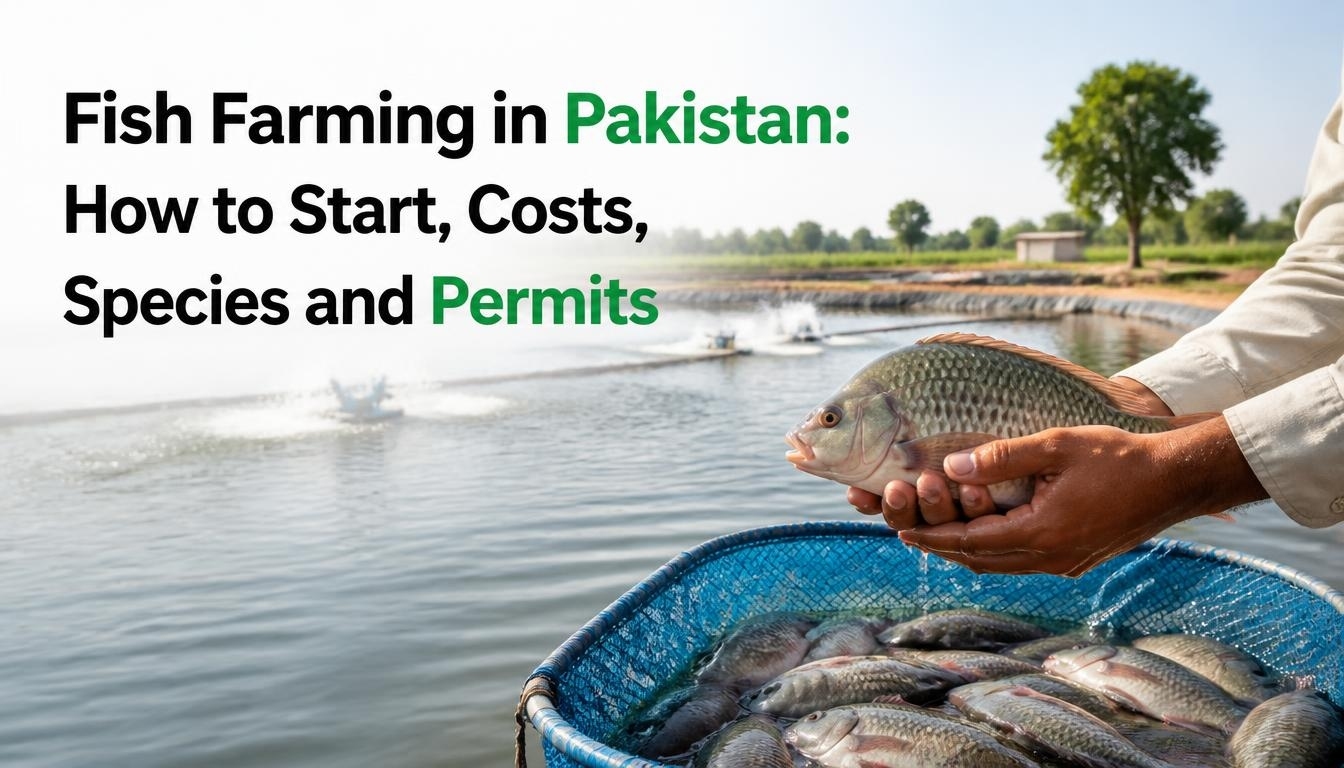
Pakistan has rivers, canals, warm weather and a big appetite for fish, so it is no surprise that more people are asking how to start a fish farm in Pakistan. The idea is simple: raise fish in ponds or tanks, feed them well and sell them at market size. The details are not. Species choice, pond design, permits and costs all decide whether a farm makes money or just spends it.
This guide walks through fish farming in Pakistan from the first decision to the first harvest. It uses published research and government information wherever it exists, and it tells you plainly where the numbers are old or missing. Treat it as a starting plan, then confirm the details with your provincial fisheries department.
Fish Farming in Pakistan at a Glance
Most farms fall into one of three setups. This table shows how they differ.
Setup | Typical fish | Best for | Main challenge |
Earthen pond (polyculture) | Rohu, mori, thaila, silver, grass and common carp | Farmers with land and water access | Needs space and a full season to grow |
Biofloc tanks | Tilapia, pangasius | Small plots and intensive production | Constant aeration, monitoring and power |
Cold water raceways | Rainbow trout | Northern areas with cold, clean water | Limited to suitable locations |
Best Fish Species for Fish Cultivation in Pakistan
The right species depends on your water, climate and market. Most beginners start with carp because the fish are hardy and farmers know them well.
Carp polyculture in ponds
The Punjab Fisheries Department lists rahu (rohu), mori (mrigal), thaila (catla), silver carp, grass carp, bighead carp and common carp (gulfam) among the species suited to culture. Different carps feed at different depths, so stocking them together uses the whole pond. A survey of 60 carp farms in four Khyber Pakhtunkhwa districts reported this typical stock mix:
Species | Share of stock |
Rahu (rohu) | 40% |
Mori (mrigal) | 20% |
Silver carp | 15% |
Grass carp | 15% |
Common carp | 10% |
Rohu are the main market fish. Farmed rohu usually reach about 1 to 2 kg in 10 to 12 months in polyculture ponds. They grow best at 25 to 32°C, need dissolved oxygen above 5 mg/L and a pH of 7 to 9, and should be kept at about 3,000 to 4,000 fish per acre unless you add aeration.
Tilapia and pangasius
These omnivorous fish are the ones most often used in intensive and biofloc systems. If you want to farm them, ask your provincial fisheries department about species rules before you buy seed.
Rainbow trout
Trout need cold, clean, well oxygenated water, so they suit the northern areas rather than the plains. The Punjab department also lists rainbow trout as a culturable species.
If you want to see how these fish rank for eating, our guide to the best kinds of fish to eat in Pakistan covers the consumer side, and our detailed guide to the best fish for farming in Pakistan goes deeper on each species.
Fish Farming Steps: How to Start a Fish Farm in Pakistan
These fish farming steps apply to a pond farm. Biofloc follows the same logic with tanks instead of ponds.
• Step 1: Choose the site and test the water. You need a suitable pond or land, a clean and reliable water source and access to a market. The Punjab Fisheries Department offers free soil and water analysis at its Fisheries Research and Training Institute in Manawan, Lahore.
• Step 2: Get a feasibility report and training. The department says its district offices prepare fish farming feasibility reports at no charge, and the Manawan institute provides training.
• Step 3: Check permits and paperwork. Rules differ by province, so confirm what you need before you dig (see the permits section below).
• Step 4: Build and prepare the pond. Dig to a workable depth, make sure you can control the water level, and prepare the pond before stocking. Fertilising with cattle manure or poultry litter helps grow natural food, which can supply a large share of the diet in a well managed polyculture pond.
• Step 5: Buy quality seed. Fish seed is available from government hatcheries, aquaculture nurseries and district nurseries at government set rates. Use healthy fingerlings of the right size.
• Step 6: Feed and manage. A common supplementary feed is rice bran and mustard oil cake mixed at 3 to 1, given twice a day at about 2 to 5% of body weight. Watch water quality, oxygen and fish health regularly.
• Step 7: Harvest and sell. Farms in Khyber Pakhtunkhwa mostly harvest between October and February. Plan your buyers before harvest, not after.
For the wider picture of the industry you are entering, read our comprehensive guide to fisheries in Pakistan.
Pond Farming or Biofloc: Which Setup Should You Choose?
Earthen pond farming
Ponds are the traditional route and the best documented one in Pakistan. They need more land and a longer growing season, but the method is familiar, and government extension support is built around it.
Biofloc fish farming for beginners
Biofloc keeps fish in tanks with little water exchange. Bacteria in the water turn waste into natural feed. According to a 2021 Business Recorder interview with one biofloc farm owner, the method works only with omnivorous fish such as tilapia and pangasius, uses far less land and water than ponds and was then producing roughly 1% or less of Pakistan's fish. The same farmer claimed much higher output per marla, two six month cycles a year and a production cost of about Rs 83 per kg compared with Rs 160 per kg in traditional farming. These are one promoter's claims from 2021, not independent data, so verify them before relying on them.
Biofloc needs constant aeration, close water monitoring and a dependable power supply, so power cuts are a real risk. For that reason, biofloc fish farming for beginners works best after some training or a small trial batch. Our dedicated guide, biofloc fish farming for beginners, covers the setup in detail.
How Much Does Fish Farming Cost in Pakistan?
Honest cost data is hard to find, and most of what is online is marketing. The best sourced figures available come from a study of 60 carp farms in four Khyber Pakhtunkhwa districts (Mardan, Swabi, D.I. Khan and Kohat), published in 2018. The data year is not stated, and prices have risen since, so use these as a guide to proportions, not as today's budget.
Item (per acre, rupees) | Amount |
One time set up cost (total) | 124,000 |
Land (imputed value) | 43,000 |
Manpower | 25,000 |
Pond materials | 14,000 |
Transport | 9,000 |
Other | 33,000 |
Yearly running cost (total) | 38,000 |
Harvesting and catching | 10,500 |
Feed | 8,000 |
Manpower | 6,000 |
Fertiliser | 5,000 |
Miscellaneous | 4,000 |
Fingerlings | 2,500 |
Irrigation water | 2,000 |
Two points stand out. First, harvesting and feed were the biggest running costs, and fingerlings were among the smallest. Second, the study did not include a separate land lease, so add that if you rent. For a current figure, ask your district fisheries office for a free feasibility report and collect two or three local quotes for pond digging, seed and feed.
Permits, Training and Government Support
Requirements depend on your province, and no single national rule turned up in the sources checked. For Punjab, the Punjab Fisheries Department says it has offices in every district and provides several services that matter to a new farmer:
• Free soil and water testing and free feasibility reports.
• Training in fish farming at the Manawan institute in Lahore.
• Fish seed from government hatcheries and nurseries at set rates, bookable online or at a Fisheries Information and Services Centre.
• Extension and technical guidance, including disease control advice.
For its farm services, the department's FAQ lists a CNIC, proof of land ownership or lease and a completed application form, with processing usually taking 7 to 10 working days. Its FAQ pages do not state licence, registration or lease fees, so confirm those with your district office. If you are in Sindh, Khyber Pakhtunkhwa, Balochistan or another region, contact your own provincial fisheries department.
How Long Does It Take, and Is It Profitable?
Time to market
In carp polyculture ponds, rohu usually take 10 to 12 months to reach about 1 to 2 kg, and most harvests in the Khyber Pakhtunkhwa study fell between October and February. Intensive systems can be faster, but you should treat reported cycle times as claims until you see them on a real farm.
Profitability
Profit depends on yield, fish prices, feed cost and your own management. In the 2018 Khyber Pakhtunkhwa study, average output was about 1,083 kg per acre, revenue was about Rs 110,370 and net returns were about Rs 72,370 per acre per year before counting the one time set up cost of Rs 124,000. By simple arithmetic, that set up cost would take a little under two years to recover if those figures held, but fish prices and input costs have changed since the study. Do not rely on any single set of numbers. Build your own budget from current local quotes and work out your break even point before you invest.
Frequently Asked Questions
How much does it cost to start fish farming in Pakistan?
Costs vary by setup, location and year. A study of 60 carp farms in Khyber Pakhtunkhwa, published in 2018, put the one time cost at about Rs 124,000 per acre and yearly running costs at about Rs 38,000 per acre. Prices have risen since then, so use those figures as a guide to proportions only and ask your district fisheries office for a free feasibility report with current numbers.
Which fish are best for farming in Pakistan?
Rohu, mrigal, catla, silver carp, grass carp and common carp are the standard choices for pond polyculture in Pakistan. Tilapia and pangasius are used in intensive and biofloc systems, and rainbow trout suits cold northern water. Check with your provincial fisheries department about species guidance before you buy seed.
Do I need a permit or license to start a fish farm?
Requirements depend on your province, so check with your provincial fisheries department before you build. The Punjab Fisheries Department says it has offices in every district and lists a CNIC, proof of land ownership or lease and an application form for its farm services, but its FAQ pages do not state licence or registration fees. Confirm the rules and costs with your district fisheries office.
How long does it take for farmed fish to reach market size?
In polyculture ponds, rohu usually reach about 1 to 2 kg in 10 to 12 months, and farms in Khyber Pakhtunkhwa commonly harvest between October and February. Intensive and biofloc systems can be faster, with one promoter reporting two six month cycles a year, though that claim is not independently verified.
What is biofloc, and is it suitable for beginners?
Biofloc is an intensive method that keeps fish in tanks with little water exchange while beneficial bacteria turn waste into natural feed. It works with omnivorous fish such as tilapia and pangasius. It uses little land and water, but it needs constant aeration, close water monitoring and a reliable power supply, so beginners should take training or start with a small trial first.
Is fish farming profitable in Pakistan?
It can be, but only with good management and real numbers. The 2018 Khyber Pakhtunkhwa study found net returns of about Rs 72,370 per acre per year before counting the one time set up cost of Rs 124,000. Fish prices, feed costs and yields change, so get a current feasibility report and work out your own break even point before investing.
Conclusion
Fish farming in Pakistan can work, especially with carp in well managed ponds, but success comes from preparation. Test your water, take the free training and feasibility help your fisheries department offers, confirm your permits, and build a budget from current local prices instead of old averages. Start small, learn the fish and the market, and expand only when your own numbers support it.
Next step: Book a feasibility report with your district fisheries office, then read our guides on biofloc fish farming for beginners and fish farming cost in Pakistan to plan your setup.