
Endangered Aquatic Animals: Species at Risk Today
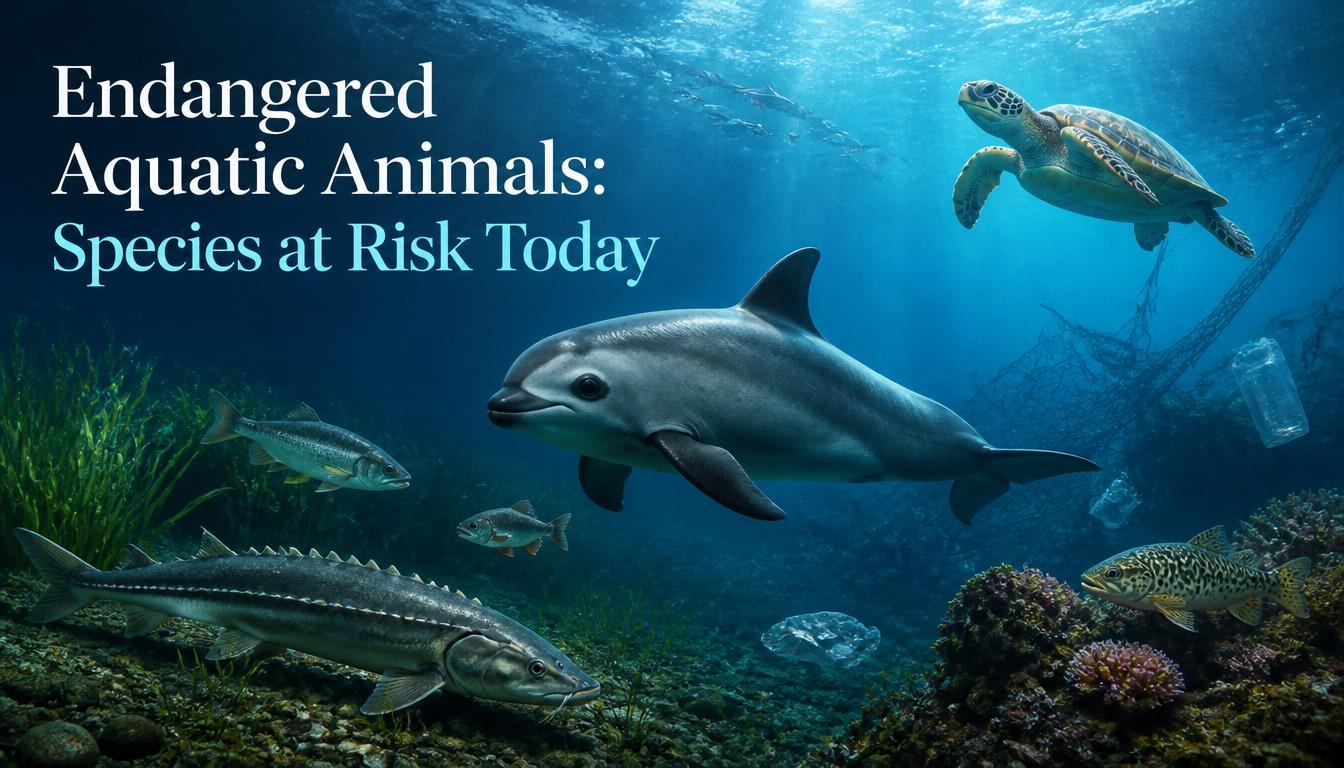
Not every threatened species makes headlines. While pandas and tigers get most of the attention, some of the most endangered aquatic animals on the planet live entirely out of sight, underwater. From a porpoise down to fewer than a few dozen individuals to fish species that vanished before most people ever heard of them, the list of endangered water animals is longer and growing faster than most people realize. Here's a closer look at which species are most at risk and why.
Why So Many Aquatic Animals Are Endangered
Aquatic species face a mix of pressures that push them toward extinction faster than land animals in many cases: overfishing, habitat destruction, pollution, and warming waters all compound on top of each other. A recent global assessment found that roughly a quarter of the world's freshwater fish, along with related freshwater species like crabs and crayfish, are now at high risk of extinction a scale of decline that had gone largely undocumented until recently. Unlike a forest, degraded water systems are harder to see, which means aquatic species often slip toward extinction with far less public attention than their land based counterparts.
Endangered Fish and Water Species to Know
Some of the most at risk species spanning oceans, rivers, and everything in between include:
- Vaquita The world's smallest porpoise, found only in Mexico's Gulf of California, with a population now down to a small handful of individuals. Considered one of the most endangered aquatic animals on Earth.
- European Eel Once common across the continent, populations have collapsed by roughly 95% in parts of the UK over the past 25 years due to overfishing, habitat loss, and illegal trade.
- Chinese Paddlefish One of the largest freshwater fish that ever existed, formally declared extinct after decades without a confirmed sighting a stark example of how quickly a species can disappear.
- Totoaba A large fish native to the Gulf of California, critically endangered due to demand for its swim bladder; its illegal fishing is also a leading cause of vaquita bycatch deaths.
- Beluga and Other Sturgeon Species Prized for caviar, several sturgeon species are now critically endangered due to decades of overharvesting combined with dams blocking their spawning migrations.
- Hawksbill Turtle Though a reptile rather than a fish, this critically endangered sea turtle is commonly grouped among endangered water animals due to its dependence on marine and reef habitat.
- Oceanic Whitetip Shark Once one of the most common sharks in the open ocean, now critically endangered, with assessments showing more than 200 shark and ray species globally facing endangered or critically endangered status.
What's Driving the Decline
The causes vary by species, but a few patterns repeat across nearly every fish endangered today: bycatch in gear meant for other species, habitat loss from dams and coastal development, pollution, and demand for specific body parts like fins, swim bladders, or eggs. Climate change adds another layer, shifting water temperatures and currents faster than some species can adapt or relocate.
What Actually Helps a Species Recover
Recovery isn't hypothetical several species have pulled back from the brink when the right combination of protections was applied consistently. Reducing bycatch through modified fishing gear, restoring blocked spawning habitat, and enforcing catch limits based on real population surveys have all helped specific populations stabilize. The timeline varies enormously by species: fast reproducing fish can rebound within a decade of protection, while slow growing species like sturgeon may take generations to recover even under ideal conditions.
FAQ
What is the most endangered aquatic animal in the world?
The vaquita, a small porpoise found only in Mexico's Gulf of California, is widely considered the most endangered marine mammal, with a population reduced to a small handful of individuals.
Are freshwater species also endangered, or just ocean species?
Both. Recent assessments show roughly a quarter of the world's freshwater fish and related species are at high risk of extinction, a rate comparable to many ocean species.
Has any aquatic species already gone extinct?
Yes. The Chinese paddlefish, one of the largest freshwater fish ever recorded, was formally declared extinct after no confirmed sightings for decades.
Why are sharks and rays so often endangered?
Sharks and rays grow slowly and reproduce few offspring at a time, making it difficult for populations to recover from overfishing, which is why a large share of assessed species are now classified as endangered or vulnerable.
Conclusion
Endangered aquatic animals rarely get the same spotlight as land based species, but the scale of the crisis from a nearly extinct porpoise to a quarter of the world's freshwater fish is just as urgent. Understanding which species are most at risk, and why, is a first step toward supporting the conservation efforts working to prevent the next extinction. Curious about a specific species or region? Get in touch and we'll cover it in more depth.