Best Fisheries Management Degree Programs (2026)
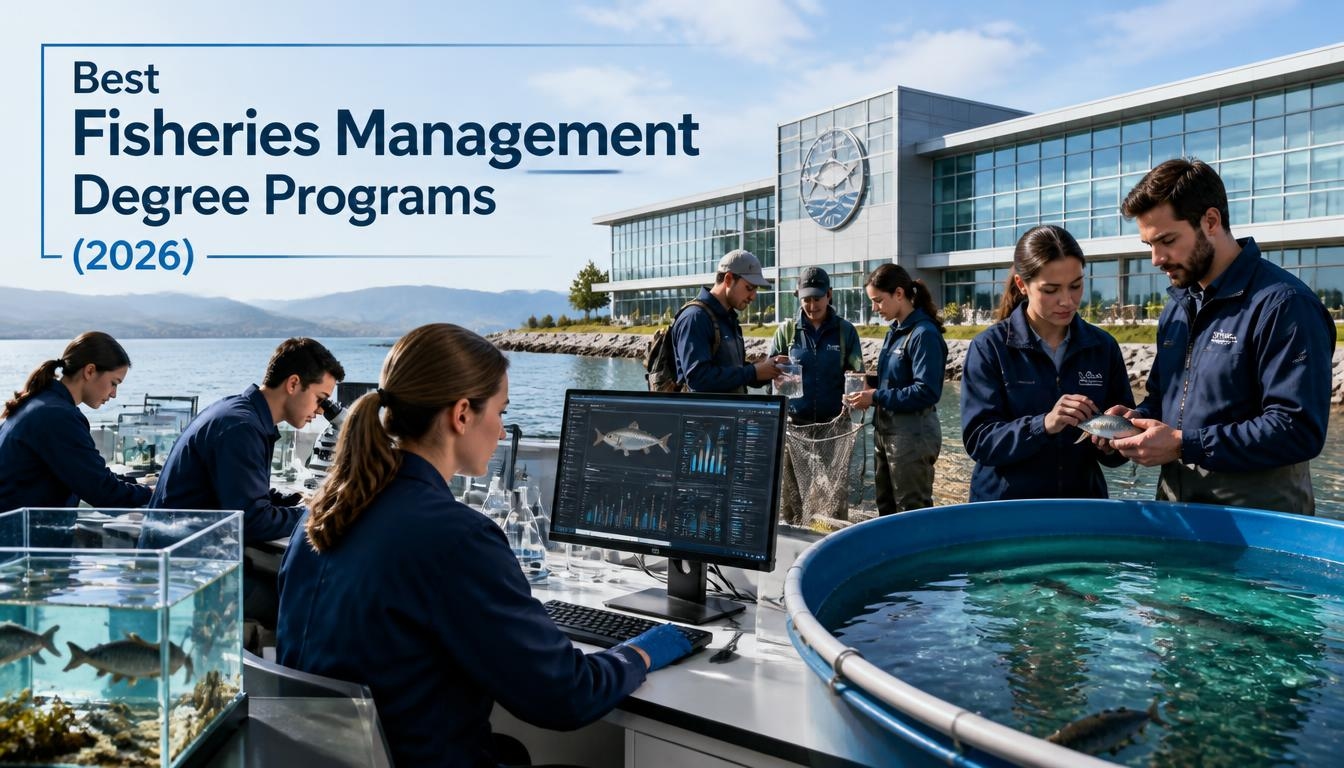
Choosing a fisheries management degree means choosing between dozens of programs that look similar on paper but differ a lot in fieldwork opportunities, faculty specialties, and career outcomes. Whether you're aiming for a fisheries biologist role with a state wildlife agency, a research career, or a path into aquaculture, the right fisheries university and program track matter more than the degree title alone. This guide compares the strongest undergraduate and graduate programs, covers legitimate online options, and lays out what fisheries biologist salaries actually look like after graduation.
What Is a Fisheries Management Degree?
A fisheries management degree trains students to study, monitor, and manage fish populations and the aquatic ecosystems they depend on. Coursework typically spans fish biology and population dynamics, aquatic ecology and limnology, water quality science, statistics and data analysis, and policy or resource management. Many programs are housed within a broader department of fisheries, wildlife, and conservation biology, since fish population management overlaps heavily with wildlife and habitat conservation work.
Degrees are offered at every level bachelor's, master's, and doctoral and some schools also offer a more applied degree in fisheries science with a stronger aquaculture or hatchery management focus rather than a pure wildlife management emphasis.
Best Undergraduate Fisheries Management Programs
University | Program Highlight |
Virginia Tech | Consistently ranked among the top fishing & fisheries sciences & management programs nationally, based in Blacksburg, VA. |
University of Florida | Offers multiple wildlife, fish, and wildlands science and management degree tracks with strong research funding. |
Texas A&M University | Large, well resourced fisheries and wildlife sciences department with extensive fieldwork opportunities. |
Oregon State University | Department of Fisheries, Wildlife, and Conservation Sciences offering undergraduate through PhD programs. |
Michigan State University | Department of Fisheries and Wildlife with a strong focus on applied fish and wildlife research. |
UC Davis | Wildlife, Fish and Conservation Biology major with a broad ecology and evolution foundation. |
University of Wisconsin–Stevens Point | Wildlife Ecology and Management degree that can be tailored toward fish and fisheries management. |
Paul Smith's College | Focused 4 year B.S. in Fisheries and Wildlife Science aimed directly at fisheries and wildlife careers. |
Best Master's and Graduate Fisheries Programs
A master's in fisheries science is often the practical minimum for research track or advanced agency roles, and several schools stand out at the graduate level:
- Clemson University well reviewed graduate program with active fisheries and wildlife research groups.
- University of Florida strong graduate research infrastructure alongside its undergraduate offerings.
- University of Wisconsin–Madison established natural resources graduate school with fisheries specializations.
- Brigham Young University offers graduate wildlife and fisheries management degrees with dedicated faculty mentorship.
- University of Washington strong fit for students interested in Pacific fisheries and marine adjacent research.
- Texas A&M University offers both master's and doctoral tracks within its fisheries and wildlife sciences department.
Online Aquaculture and Fisheries Adjacent Degrees
Fully online options are more limited than on campus programs because of the fieldwork most fisheries curricula require, but a few legitimate paths exist for students who need flexibility:
- Unity Environmental University offers a fully online BS in Marine Biology and Sustainable Aquaculture, a 120 credit program built for working adults with multiple start dates per year.
- Colorado State University its Department of Fish, Wildlife, and Conservation Biology offers both on campus and online program options.
- Southern New Hampshire University offers a BS in Environmental Science with a Natural Resources & Conservation concentration that can serve as a stepping stone into fisheries adjacent careers.
If field research and hands on hatchery or stream survey experience matter for your target career, confirm how a program handles required practicums before committing to a fully online track.
Career Paths and Salary After a Fisheries Degree
The U.S. Bureau of Labor Statistics groups fisheries biologists under its Zoologists and Wildlife Biologists category, which reported a median annual wage of $72,860 as of 2024. Earnings vary widely by employer and experience: the lowest 10% earned under $48,240, while the highest 10% earned more than $113,350, with federal research and senior technical roles pulling toward the top of that range.
Entry level roles research technician, hatchery assistant, field biologist typically start in the $35,000 to $50,000 range, moving toward $55,000–$80,000 for mid career fisheries scientists and environmental consultants. A master's or PhD generally opens the door to research leadership, academic, and senior agency positions at the higher end of the pay scale.
How to Choose the Right Program
- Fieldwork access: Look for programs with dedicated field stations, hatcheries, or partnerships with state wildlife agencies.
- Faculty research focus: Match a program's faculty specialties (freshwater, marine, aquaculture) to your career interest.
- Accreditation and outcomes: Check graduate employment rates and where alumni have landed jobs.
- Cost and location: In state tuition at public universities can cut costs significantly compared to private or out of state options.
- Degree flexibility: If you need to work while studying, confirm which online or hybrid options genuinely fit fisheries coursework requirements.
FAQs
What degree do you need to become a fisheries biologist?
Most entry level fisheries biologist roles require at least a bachelor's degree in fisheries science, wildlife biology, or a closely related field; research and senior agency positions typically require a master's degree or PhD.
What is the best university for a fisheries management degree?
Virginia Tech, University of Florida, Texas A&M, Oregon State University, and Michigan State University are consistently cited among the strongest undergraduate fisheries and wildlife management programs in the U.S.
Can you get an aquaculture degree online?
Yes Unity Environmental University offers a fully online BS in Marine Biology and Sustainable Aquaculture, and Colorado State University offers online options through its Department of Fish, Wildlife, and Conservation Biology, though field heavy coursework may still require in person components.
How much do fisheries biologists earn?
The BLS reports a median annual wage of $72,860 for zoologists and wildlife biologists (2024 data), with entry level roles closer to $35,000–$50,000 and senior research or federal positions exceeding $113,350.
Is a master's in fisheries science worth it?
A master's degree generally opens access to research focused roles, senior agency positions, and higher salary bands, making it worthwhile for students aiming beyond entry level fieldwork or technician roles.
What courses are part of a fisheries management degree?
Typical coursework includes fish biology and population dynamics, aquatic ecology and limnology, water quality science, statistics, and natural resource policy, often within a broader fisheries, wildlife, and conservation biology department.
Conclusion
The strongest fisheries management degree for you depends less on national rankings and more on fieldwork access, faculty research fit, and whether you need an online track. Programs at schools like Virginia Tech, University of Florida, and Oregon State University offer deep fieldwork infrastructure, while options like Unity Environmental University fill the gap for students who need a flexible, largely online path into aquaculture and fisheries adjacent careers. Whichever route you choose, understanding realistic salary expectations a median of roughly $72,860 per BLS data helps set the right expectations before you enroll.
For more on the species these programs prepare students to study, browse our Fisheries & Aquaculture section, including our guide to pisciculture and fish farming science.